
Running multi-unit kitchens is stressful when food taste changes between stores. Customers notice bad flavors fast, and your food waste quietly destroys your monthly profit margins across different branches.
Chains eliminate taste and margin inconsistencies by standardizing kitchen hardware with fixed-stroke portion pumps, calibrated sauce dispensers, and fast-recovery commercial fryers. These tools remove human estimation errors, control exact ingredient costs, stabilize oil temperatures during peak rushes, and maintain identical food quality across all franchised outlets.
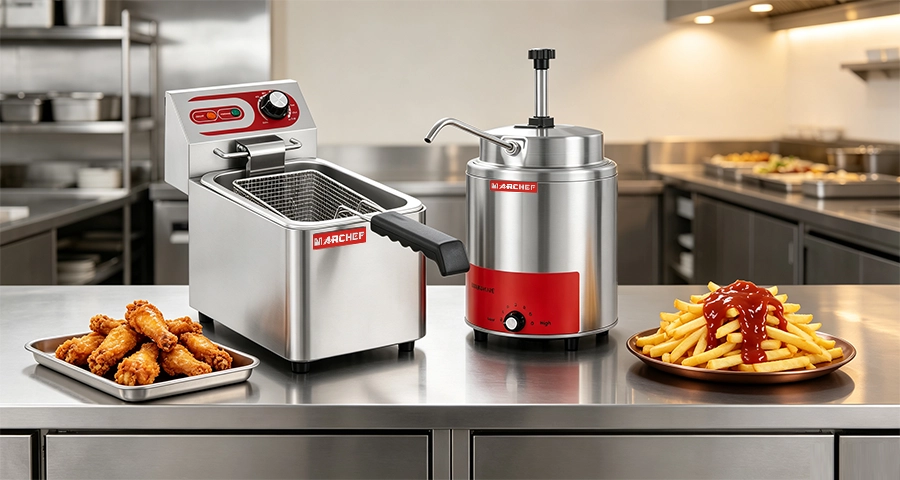
I learned this hard lesson years ago while inspecting several busy franchise outlets. Kitchen staff worked fast, but nobody measured anything accurately, and the food quality varied wildly between stores.
How Does Portion Control Equipment Protect Multi-Location Brand Reputation?
High staff turnover creates chaotic prep lines and uneven plating every day. Uncalibrated ladles waste expensive sauces, change your signature flavor profile, and frustrate loyal customers who expect exact consistency.
Portion control equipment protects brand reputation by locking in exact serving sizes through mechanical stops and fixed-stroke pumps. This hardware prevents staff from over-portioning ingredients, ensures identical flavor delivery at every store visit, and drastically cuts training time for new kitchen staff.
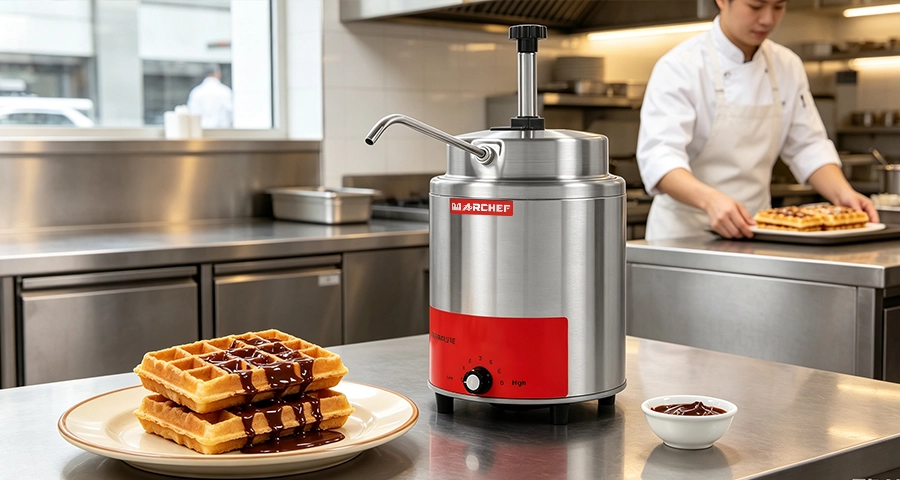
The Hidden Cost of Inconsistency: Why Slight Formula Deviations Compound Across 50+ Outlets
Small measurement errors create huge financial losses across large franchise networks. When a line worker adds an extra 4 grams of sauce per sandwich, the daily numbers look small. Across 50 stores serving 600 sandwiches daily, that tiny mistake wastes 120 kilograms of product every single day. This deviation burns cash and changes the nutritional balance of the meal.
Eliminating Human Error: Standardizing Sauce Dispensers and Batter Stations for High-Turnover Staff
Fast-food kitchens face high worker turnover and tight assembly timelines. New workers cannot judge weights by eye during a heavy lunch rush. Fixed-stroke sauce guns deliver an exact dose of condiment with one squeeze. Standardized batter stations ensure every piece of chicken receives the exact same coating thickness before it hits the frying oil.
The Role of Commercial Portion Pumps in Streamlining Kitchen SOPs and Training
Mechanical portion pumps make standard operating procedures simple to teach. Managers do not need to train staff on complex visual measurements. Workers only need to press a pump down completely. This mechanical control speeds up ticket assembly, reduces wrist strain during long shifts, and keeps output uniform.
| Portion Control Method | Accuracy Variance | Training Time Required | Daily Clean-down Time | Annual Margin Protection |
|---|---|---|---|---|
| Free-pour / Standard Ladles | ±18% to 25% | High (Requires practice) | 5 Minutes | Low (High product waste) |
| Squeeze Bottles (Unregulated) | ±12% to 15% | Medium | 8 Minutes | Medium |
| Fixed-Stroke Mechanical Pumps | ±1% to 2% | Minimal (10 Minutes) | 12 Minutes | Maximum |
| Metered Hanging Sauce Guns | ±1% to 2% | Minimal (5 Minutes) | 10 Minutes | Maximum |
How Do Precision Cooking and Dispensing Tools Guarantee Consistent Fried Chicken and Sauces?
Cold chicken drops fryer oil temperature fast during peak rush hours. Weak heating elements take too long to recover heat, which creates soggy, greasy food that ruins customer trust.
Precision cooking tools guarantee consistency by combining fast thermal-recovery heating systems with dedicated viscosity-matched pumps. High-output heating elements keep oil temperatures stable during back-to-back batches, while airtight dispensing valves prevent clogs and deliver dense condiments with absolute weight accuracy.
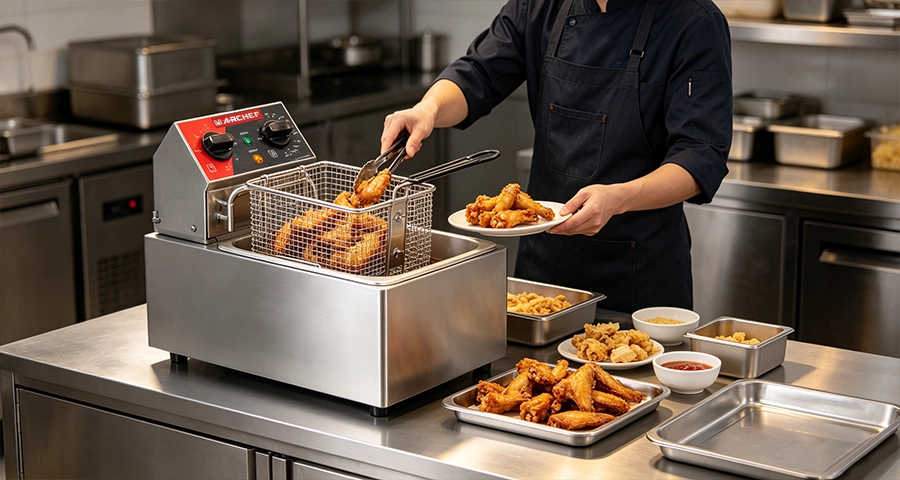
Commercial Fryer Temperature Stability: Recovery Time and Oil Quality Control Under Peak Rush Hours
When cold chicken drops into hot oil, the oil temperature drops instantly. Standard fryers take several minutes to heat back up. This delay causes food to absorb excess oil, turning crispy crusts into greasy dough. High-efficiency fryers use smart heating controls and dense heating elements to recover target temperatures in seconds. Fast recovery seals the exterior batter immediately, preserves clean oil life, and maintains a light, crispy texture.
Sauce Guns vs. Countertop Dispensing Systems: Choosing the Right Portion Control Tool for High-Volume Fast Food
Kitchen layout determines the right portioning hardware. Handheld sauce guns give workers speed and agility along drive-thru assembly lines. Countertop pumps work best for high-volume prep areas, dipping stations, and back-of-house bulk assembly. Both systems keep food safe by sealing sauces inside food-grade containers away from open-air kitchen contamination.
Maintaining Flow & Viscosity: Dispensing Thick Condiments, Dressings, and Marinades Accurately
Thick sauces like mayonnaise, tartar sauce, and heavy marinades trap air pockets inside ordinary containers. Standard pumps sputter and deliver half-portions when they hit these air bubbles. Heavy-duty dispensing pumps use vacuum seals and wide-bore intake valves to pull dense fluids cleanly through the chamber. This engineering ensures exact shot-weight repeatability on every squeeze.
| Equipment Type | Best Product Viscosity | Primary Kitchen Application | Temperature Recovery / Shot Speed | Key Operational Benefit |
|---|---|---|---|---|
| High-Recovery Electric Fryer | N/A (Vegetable / Shortening Oils) | Bone-in Chicken & French Fries | < 45 Seconds Recovery | Crisp exterior, zero oil sogging |
| Handheld Metered Sauce Gun | Medium to Heavy Emulsions | Drive-thru Burger Assembly | 1.2 Seconds per Shot | Fast assembly line movement |
| Countertop Piston Pump | Heavy Condiments & Purees | Prep Tables & Bulk Dressing | 1.0 Second per Shot | Airtight delivery, zero air-gap errors |
| Heated Dipping Dispenser | Melted Cheese & Warm Glazes | Hot Snack Holding Lines | Instant Flow at Set Temp | Eliminates sauce skinning & hardening |
Why Are Precision Dispensers and Fryers Critical High-Demand B2B Categories for Kitchen Dealers?
Commercial kitchen dealers lose money when cheap equipment breaks down frequently. Low-quality valves and weak heating elements trigger warranty disputes, tie up service technicians, and cause client frustration.
Dealers focus on precision dispensers and high-recovery fryers because these tools deliver high margins, low warranty claims, and continuous repeat orders. Commercial restaurant groups prioritize certified, durable 304 stainless steel equipment that speeds up daily sanitation and reduces post-sale service calls.
Key Sourcing Criteria for QSR Chains: NSF/ETL Compliance, Food-Grade Materials, and Rapid Tear-Down Cleaning
Commercial restaurant chains demand strict equipment build standards. Chains require 304 food-grade stainless steel construction to prevent rust and surface corrosion from acidic sauces. Units must carry NSF and ETL sanitation marks so operators pass health inspections without delays. Equipment must also feature tool-free disassembly so night staff can tear down, wash, and sanitize parts in minutes.
Minimizing Post-Sale Service Calls: Reliability and Modular Spare Parts in High-Wear Kitchen Tools
Equipment dealers protect their service margins by selecting modular machinery. High-wear parts like silicone O-rings, valve springs, and heating thermostats will wear out over time. Equipment built with drop-in replacement modules lets kitchen workers swap worn seals directly on-site. This modular design keeps service technicians free for major projects and cuts warranty expenses.
OEM/ODM Customization: Tailoring Dispensing Volumes and Private Labeling for Regional Franchise Chains
Large restaurant brands require custom dispensing setups tailored to their proprietary recipes. Fixed factory standards rarely match the specific gram yields required by unique menu items. OEM customization allows factories to calibrate internal pump cylinders to exact volumes like 10ml, 15ml, or 25ml. Private label branding also gives restaurant chains unified equipment styling across hundreds of regional stores.
| Commercial Sourcing Metric | Standard Commercial Tier | Premium Chain-Grade Standard | Impact on Franchise Operations |
|---|---|---|---|
| Material Specification | 201 Stainless Steel / ABS Plastic | 304 Food-Grade Stainless Steel | Eliminates corrosion from acidic food |
| Sanitation Certification | Basic Factory CE | NSF / ETL Sanitation Standards | Ensures immediate health code compliance |
| Disassembly Method | Requires Screwdrivers / Tools | 100% Tool-Free Quick Release | Saves 20 minutes per shift on cleaning |
| Component Architecture | Fixed Internal Components | Modular Wear-Part Replacements | Cuts post-sale service calls by up to 60% |
Conclusion
Standardized portion dispensers and high-recovery fryers eliminate human error, protect multi-unit profit margins, stabilize oil life, and maintain identical food quality across all restaurant locations.