
Are your kitchen staff struggling with cold, soggy burger buns during peak lunch rushes? Line cooks waste valuable minutes babysitting bread on crowded cooktops, which slows down your entire order pipeline.
A vertical contact bun toaster is best for high-volume burger chains needing fast, uniform 15-second cycles, while a flat top griddle suits low-volume kitchens that prefer rich butter-crisped buns without buying dedicated equipment. Your choice depends on your hourly ticket volume, hood space, and menu style.
You want to serve hot burgers fast, but your kitchen line hits a hard wall when tickets pile up.
How Do CapEx, Labor, and Peak Speed Compare?
Slow cook lines kill your table turn rates and drive hungry guests away. When staff stand around watching bread brown, your ticket times climb, and kitchen labor costs quickly eat into your profits.
Vertical contact toasters win on speed and labor savings during peak hours by delivering finished buns in 10 to 15 seconds. Flat top griddles cost less upfront but require manual monitoring, taking 60 to 90 seconds per batch while pulling cooks away from meat prep.
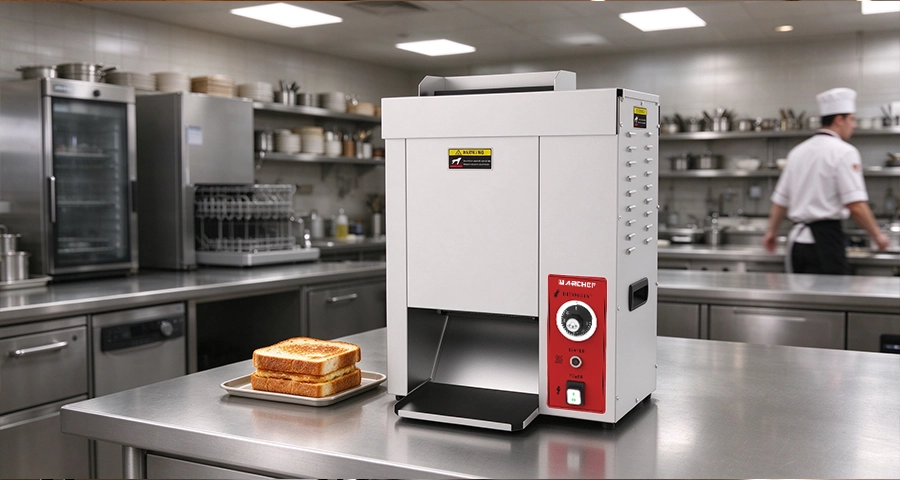
I spent years working directly with commercial cooking lines, and I see kitchen operators make the same mistake with their prep balance every day. A standard flat top griddle looks like a bargain because you buy one machine to cook everything. You drop cold butter on the plate, set down the cut bread, and wait. That manual process takes between 60 and 90 seconds. A cook must watch the surface constantly so the bread does not burn.
In contrast, a dedicated vertical contact toaster uses a continuous feed track. A staff member drops the split crown and heel into top feed slots, and the machine rolls them out the bottom chute in just 10 to 15 seconds. That speed difference changes your entire shift. A single worker drops buns into the slot, turns around to dress the wrapper, and picks up a toasted bun immediately. The machine handles the timing, which frees your line cook to focus on patty weights and grill temperatures. Over a busy weekend shift, this automation eliminates dozens of wasted labor hours.
Machine Cost: All-in-One Griddle vs. Dedicated Bun Toaster
A heavy flat top griddle requires an initial investment in steel plate thickness and heating elements, but it handles your eggs, bacon, and burger patties in one footprint. Adding a vertical contact toaster requires a separate upfront equipment budget. You must evaluate whether your daily burger sales volume can pay back that extra machinery cost through higher hourly ticket output.
15-Second Pass vs. Manual Griddle Waiting
When you toast bread directly on a griddle, you rely on batch cooking cycles. You place four to six bun halves on the steel, wait for the crust to form, and pull them off with a spatula. A vertical conveyor continuously accepts bread halves back-to-back. As soon as one pair drops, the next pair enters the heat zone, completely eliminating line bottlenecks during lunch rushes.
Labor Optimization: Eliminating Manual Bun Monitoring
Manual griddling forces your cook to check the bread crust every few seconds to prevent black edges. This splits their attention away from searing meat. A vertical contact toaster applies automated mechanical pressure and fixed internal transit timers. Your team never needs to flip, scrape, or time the bread manually, which cuts human error down to zero.
| Metric | Flat Top Griddle Batch | Vertical Contact Toaster |
|---|---|---|
| Average Toast Time | 60 to 90 seconds | 10 to 15 seconds |
| Cook Attention Needed | High (constant flipping and checking) | None (automated drop and retrieve) |
| Output Style | Intermittent batches | Continuous single-piece flow |
| Initial Purchase Cost | Low (uses existing cooktop) | Moderate (dedicated single-use unit) |
This simple workflow shift directly influences how your toasted bread holds up under warm meat juices.
How Do They Affect Toast Quality and Moisture Barriers?
Soggy burger buns ruin good food and lead to terrible customer reviews. When sauce and burger juice soak straight through soft crumb, the bun falls apart in your customer’s hands before they finish eating.
Vertical contact toasters build a better moisture barrier by using heated platens under mechanical compression to caramelize surface starches into a tight shield. Flat top griddles deliver a richer, buttery fried texture, but their crust is less uniform across large batches.
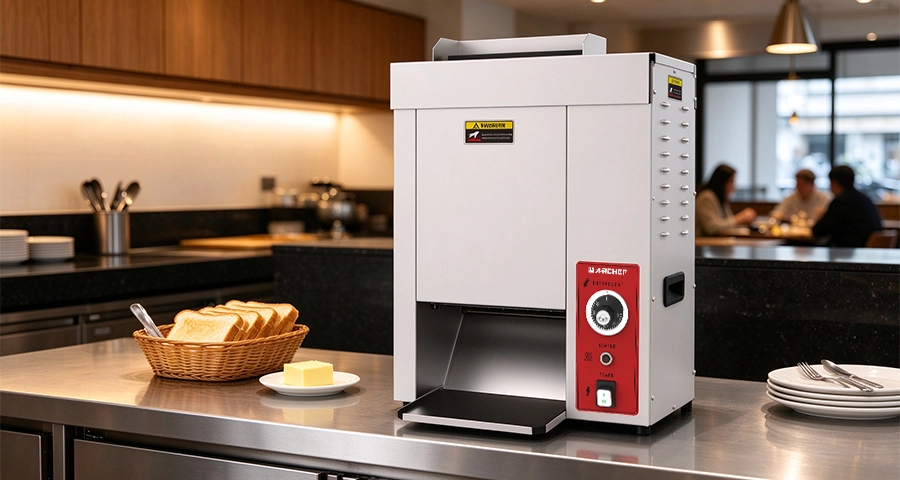
I always inspect the bottom heel of a burger first when I visit a restaurant. If the bread turns into mush under the meat, the kitchen failed to build a proper moisture barrier. When bread touches a heated surface, the surface starches break down into sugars and form a sealed, shiny crust. A vertical contact toaster uses a heavy aluminum heat plate combined with mechanical drive belts. This design compresses the cut face of the bun firmly against the heat zone, sealing the outer pore structure completely.
A flat top griddle works by thermal conduction from a flat steel plate. Cooks usually spread liquid butter or oil on the griddle surface to assist heat transfer. This pan-fried method creates deep flavor and a crunchy mouthfeel, but it does not always create an impermeable seal. Cold spots on the griddle plate often leave soft gaps where warm meat juice can soak into the bread crumb. Furthermore, soft brioche buns tend to scorch easily on flat tops because the sugar in the bread burns before the heat reaches the inner crumb.
Dual-Sided Caramelization: Preventing Soggy Buns
Vertical contact machines press the bun face directly against a heated metal platen while keeping the rounded outer crust warm and soft. This process creates a thin, hydrophobic crust across the entire cut surface. When you lay down hot beef patties, pickle brine, and warm burger sauce, the juices sit on top of the crust instead of turning the bread into wet paste.
Temperature Drift vs. Consistent Golden-Brown Finish
A commercial griddle plate experiences rapid surface temperature drops whenever cooks slap down cold, wet meat patties next to the bread zone. This temperature drift results in uneven toasting, where one bun comes out pale and the next comes out charred. Vertical contact toasters run on independent internal heating loops that hold consistent temperatures without interference from cold raw ingredients.
Bread Tolerance: Standard Buns vs. Thick Brioche
Different bread recipes react differently under intense heat. Standard sesame seed buns contain moderate sugar levels and toast easily under direct heat. High-sugar brioche buns, potato rolls, and artisan milk breads burn very fast. Commercial vertical units solve this issue with adjustable platen clearance knobs, allowing you to set separate compression gaps for light crowns and thick heels so you never smash fragile bread.
| Toast Feature | Flat Top Griddle | Vertical Contact Toaster |
|---|---|---|
| Surface Crust Structure | Porous, fried, uneven crunch | Smooth, sealed, caramelized skin |
| Liquid Resistance | Moderate (vulnerable at cold spots) | High (uniform hydrophobic barrier) |
| Flavor Profile | Rich butter and savory grill fat | Pure toasted wheat and dry sugar |
| Brioche Compatibility | Risky (prone to quick burning) | Safe (dial-controlled compression) |
The method you choose to seal your bread also dictates how much space you have left for cooking protein.
How Does Equipment Choice Impact Griddle Space and Line Flow?
A packed kitchen line creates chaotic ticket times, missed orders, and stressed cooks. If your main cooktop is completely covered in cut bread, you have no room left to sear meat when dinner rushes strike.
A dedicated vertical contact toaster frees up 25% to 40% of your flat top griddle surface, giving your cooks more room to sear meat patties. Its compact, upright frame also fits into tight kitchen gaps, keeping non-greasy bread prep out from under expensive ventilation hoods.
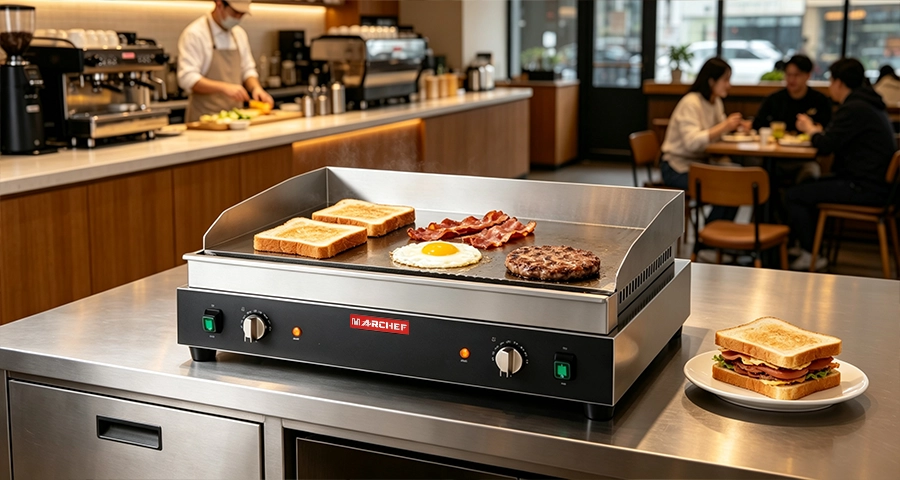
I regularly walk into tight restaurant kitchens where the line cooks are fighting for every single square inch of flat cooktop space. When you assign one-third of your main griddle plate to toasting buns, you choke your kitchen’s cooking capacity. If a three-foot griddle can hold twelve burger patties at once, dedicating a portion of that surface to bread drops your meat output down to eight patties per batch. That lost surface area directly lowers the total number of orders your staff can push through during your busiest hour.
Moving your bread to an upright vertical toaster restores your flat top for cooking burgers, onions, and bacon. Vertical contact toasters stand tall and narrow, occupying very little counter width. In addition, toasting dry bread produces dry heat rather than airborne grease smoke. In many jurisdictions, dry bread toasting appliances can sit on a side prep table outside your primary Type 1 grease exhaust hood. That layout flexibility frees up precious space under your expensive fire-suppression exhaust canopy for heavy cooking equipment.
Freeing Up Flat Top Real Estate for Burger Patties
When you take bread off the steel plate, you reclaim valuable cooking space immediately. Your cooks can spread patties across the full width of the griddle, keeping heat distribution even and cook times predictable. This extra space makes it much easier to stage large ticket orders simultaneously without running out of hot surface area.
Butter Glaze vs. Dry Contact Toasting
Using a griddle plate requires you to spread butter or oil on the steel to keep bread from sticking and to ensure heat transfer. That extra fat adds rich flavor, but it also releases grease smoke and requires constant scraping. Vertical contact toasters operate with non-stick release sheets that toast bread without added oils, keeping your station clean and lowering your raw ingredient costs.
Footprint Advantage: Saving Expensive Hood Space
Commercial exhaust hoods cost thousands of dollars per linear foot to build, ventilate, and maintain with fire suppression lines. Placing bread toasters under an exhaust hood wastes high-cost air clearance on clean starch heating. A vertical unit can sit right next to your assembly line or cold makeup table, shortening the steps your staff take to plate and wrap finished burgers.
| Layout Factor | Griddle Toasting Method | Vertical Toaster Method |
|---|---|---|
| Griddle Space Used | 25% to 40% of main cook surface | 0% of main cook surface |
| Hood Space Requirement | Must sit entirely under exhaust hood | Can sit on prep counters outside hoods |
| Added Cooking Fats | Requires butter or oil application | Operates dry without added oils |
| Assembly Proximity | Fixed at the primary cook station | Flexible placement near dressing tables |
After you optimize your kitchen space, you must consider the maintenance required to keep the line running smoothly.
What Are the Real Maintenance and Equipment Matching Strategies?
Broken kitchen machines bring service to a dead halt right in the middle of dinner service. If your equipment breaks down without warning, you face cancelled orders, high repair invoices, and lost daily revenue.
Flat top griddles offer simple mechanical durability with just steel and heating elements, needing only daily scraping. Vertical contact toasters require daily sheet cleaning, belt care, and motor upkeep, making them an ideal investment for high-speed burger chains rather than small startups.
I always advise food business operators to look past the sales brochure and look at daily cleaning schedules. A commercial flat top griddle is practically indestructible. It consists of a thick plate of cold-rolled steel, simple thermostat dials, and solid heating elements or gas burners. Cleaning it requires a scraper, a grill brick, and clean water at the end of the shift. There are no tiny drive gears to jam, no moving belts to stretch, and no complex electrical drive boards to fail under heavy loads.
A vertical contact toaster is a precision machine with active mechanical wear points. It uses internal electric motors, drive chains, rotating silicone or wire belts, and non-stick release sheets. If your staff forget to clean the internal crumb trays, grease and burnt bread crumbs build up around the drive axles. The non-stick release sheets require gentle daily washing and regular replacement when they wear thin. If you run a high-volume burger joint doing hundreds of orders an hour, the labor savings easily cover these parts. If you run a quiet neighborhood diner, the maintenance demands may outweigh the speed advantages.
Daily Cleaning: Scraping Steel vs. Non-Stick Belts and Trays
Cleaning a griddle plate takes physical elbow grease at closing time, but the process is simple and durable. Staff scrape the flat surface, wash it down, and empty the grease drawer. A vertical contact toaster requires your staff to pull out removable crumb pans, wipe down delicate heating platens, and clean non-stick carrier sheets with mild soap so the surface stays smooth.
Mechanical Wear: Motor and Belts vs. Simple Elements
Heavy flat top griddles handle continuous heat cycles without mechanical failure because they do not have moving parts. High-speed vertical conveyor toasters rely on continuous electric drive motors, sprockets, and tension springs. You must budget for regular preventive maintenance to inspect gear alignment and replace worn carrier belts before they snap during a busy rush.
Buyer Matching: Bootstrapped Startups vs. Scaled Burger Chains
If you run a small startup café with a wide, varied menu, stick to a flat top griddle. It handles mixed ingredients, requires low maintenance, and saves initial capital. If you run a high-speed burger concept with high hourly foot traffic, invest directly in a vertical contact bun toaster to protect your speed, bun quality, and kitchen line flow.
| Evaluation Area | Flat Top Griddle | Vertical Contact Toaster |
|---|---|---|
| Moving Mechanical Parts | None (solid structural steel plate) | Multiple (motor, sprockets, drive belts) |
| Consumable Parts | None under normal operation | PTFE release sheets, drive belts |
| Daily Cleaning Style | Heavy scraping and surface wipe-down | Gentle sheet cleaning, crumb tray emptying |
| Best Operational Fit | Startups, diners, diverse low-volume menus | High-volume burger chains, fast food lines |
Choosing the right equipment setup keeps your kitchen moving fast and your food quality consistent.
Conclusion
Choose a vertical contact toaster to maximize burger line speed, save hood space, and stop soggy buns, or keep a flat top griddle for low-volume, butter-crisped menu flexibility.