
Flaking Teflon coats ruin food quality and create serious safety concerns. Kitchen managers face constant equipment replacement costs and health audits due to degrading non-stick polymers under high heat.
Hard chrome plating, nitrided cast iron, and sol-gel nano-ceramic plates provide the best commercial PFAS-free surfaces. Hard chrome offers unmatched mirror release and scraper durability, nitrided cast iron delivers extreme thermal stability, and nano-ceramic provides non-toxic, high-heat resistance for light to medium sandwich service.
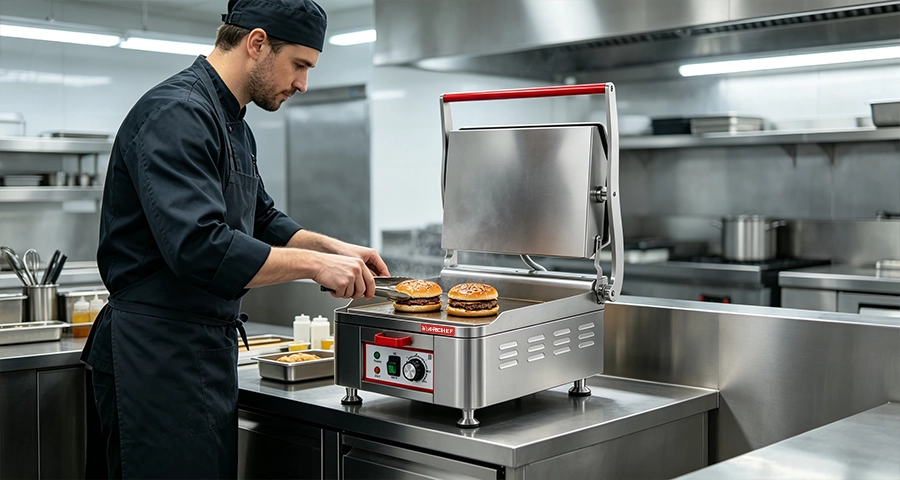
Most commercial kitchens still rely on standard synthetic coats that quickly chip, scratch, and fail under heavy line work. Switching to engineered metal surfaces solves these problems and changes kitchen operations for good.
Is Hard Chrome Plating the True Gold Standard for Busy Kitchens?
Commercial grills run hot all day, but standard non-stick surfaces peel away under high temperatures. Kitchens lose precious prep time when stuck food slows down lunch rush workflows.
The best solution for high-volume sandwich production is industrial hard chrome plating. It provides an ultra-smooth, non-porous finish with extreme scratch resistance, so kitchen staff can clean plates with metal tools without causing surface damage.
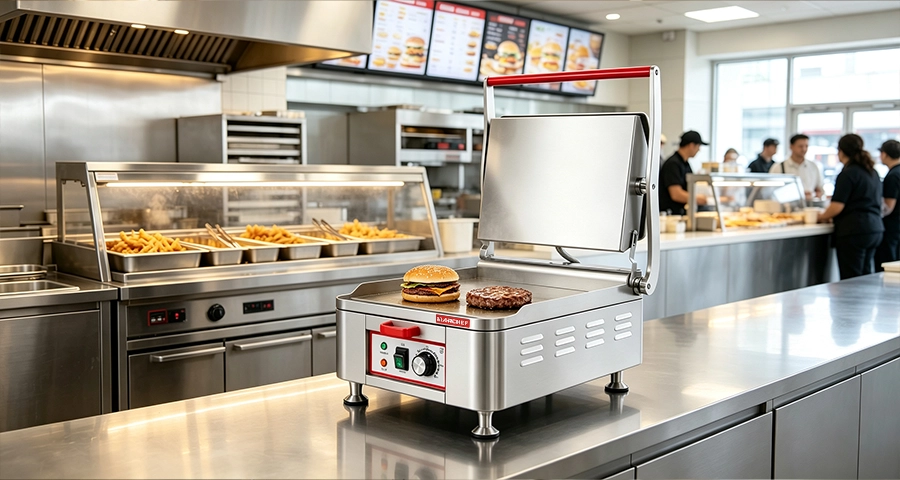
Mirror-Finish Release: Natural Non-Stick Without Polymers
Hard chrome plating creates a clean, microscopic crack-free surface. It does not use any synthetic chemical sprays or polymer films. Food releases cleanly because the metal finish is mechanically flat. Melted cheese, butter sugars, and toasted bread crusts have no rough pores to grip. In our manufacturing tests at MARCHEF, we find that chrome plating reflects radiant heat back into the sandwich. It keeps ambient heat out of the kitchen and focuses direct energy into the crust.
Scratch Resistance Against Metal Scrapers and Utensils
Commercial line cooks use stainless steel scrapers, heavy spatulas, and stiff brushes during rush hours. Standard non-stick coatings peel away when metal touches them. Hard chrome reaches a surface hardness of 65 to 70 HRC. It withstands hard metal cleaning blades and daily deglazing cycles. The plate surface stays completely flat over years of heavy service.
| Technical Parameter | Hard Chrome Plating | Standard PTFE Coating |
|---|---|---|
| Surface Hardness | 65–70 HRC | < 2 HRC |
| Chemical Coating | None (Electroplated Metal) | Synthetic Polymer (PTFE/PFAS) |
| Utensil Safety | Stainless Steel Safe | Soft Utensils Only |
| Heat Reflection | High Thermal Concentration | Low Thermal Reflection |
Does Nitrided Cast Iron Solve the Rust and Flaking Issues of Raw Iron?
Traditional cast iron offers great heat retention, but raw iron rusts quickly. Daily acid washing and heavy steam cause traditional iron seasoning layers to peel into food.
Nitrided cast iron fixes these problems by diffusing nitrogen deep into the base metal. This thermochemical process forms an iron nitride layer that stops surface rust, resists flaking, and holds cooking oils securely.
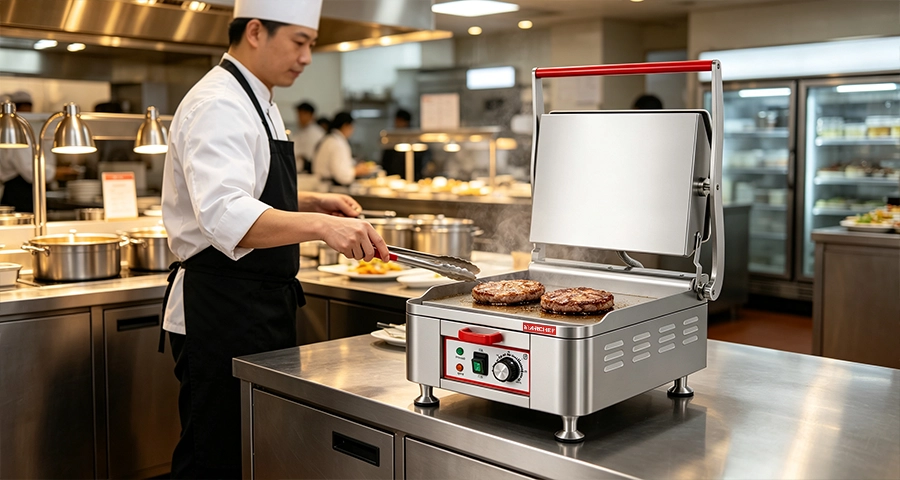
Thermochemical Hardening: Eliminating Flaking and Surface Rust
Liquid or gas nitriding treats iron under controlled high heat. Nitrogen atoms lock directly into the iron grain structure. This process creates an integrated epsilon-iron nitride barrier. The outer layer is not a paint or an added film, so it never flakes off into food. Nitriding also improves thermal shock resistance. Cooks can deglaze grease with cold water on hot plates without warping the core metal.
Micro-Porous Oil Seasoning vs. Chemical Non-Stick
Nitrided iron keeps the microscopic pores of cast iron intact. Cooking fats bake into these open spaces to build a self-renewing, carbonized seasoning layer. Because the base metal is hard and smooth, kitchens use 40 percent less oil than raw iron to build a working release surface. The seasoning layer bonds tightly to the metal base, so it does not crack during rapid thermal cycling.
| Characteristic | Nitrided Cast Iron | Traditional Cast Iron |
|---|---|---|
| Surface Oxidation | Highly Corrosion Resistant | Fast Rusting Without Oil |
| Bond Type | Integrated Nitrogen Diffusion | Surface Pores Only |
| Oil Volume Needed | 40% Less Initial Oil | High Initial Oil Saturation |
| Thermal Shock Limit | High Cold-Water Resistance | Prone to Base Warping |
Can Food-Grade Nano-Ceramic Handle Demanding Kitchen Heat?
Synthetic non-stick coatings degrade and emit dangerous fumes when grills exceed standard limits. Busy sandwich stations need safe materials that handle high surface heat without breaking down chemically.
Food-grade nano-ceramic plates handle continuous temperatures above 450°C without chemical breakdown. They use pure inorganic sol-gel chemistry, which makes them completely free of PFAS, PTFE, lead, and volatile organic compounds.
100% Inorganic Chemistry: Thermal Limits and True Durability
Nano-ceramic coatings rely on silicon dioxide derived from natural sand. The sol-gel layer cures into an inorganic glass-like ceramic matrix. This structure handles continuous operating temperatures above 450°C (842°F). The surface emits zero toxic fumes or gases even if kitchen staff leave the press on overnight. The dense ceramic wall stops food acids and burnt marinades from reaching the raw metal beneath.
Ideal Foodservice Scenarios for Sol-Gel Ceramic Press Plates
Nano-ceramic plates work best in specialty sandwich bars, breakfast cafes, and dairy-focused food lines. The inert mineral surface stops flavor transfer between delicate items like egg wraps and gluten-free breads. However, kitchen staff must treat these plates with care. Hard metal scraper corners and heavy drop impacts can chip the brittle ceramic matrix. Coarse toasted bread crumbs also create microscopic scratches over long cycles, which slowly lowers the release speed.
| Feature | Sol-Gel Nano-Ceramic | PTFE Non-Stick |
|---|---|---|
| Maximum Temperature | > 450°C (842°F) | 260°C (500°F) |
| Off-Gassing Risk | Zero Gas Release | Toxic Fumes at High Heat |
| Chemical Reactivity | 100% Inert to Food Acids | Breaks Down with Harsh Caustics |
| Impact Durability | Brittle Against Heavy Metal Hits | Soft and Prone to Gouging |
How Do These PFAS-Free Plates Compare on Daily Wear and Maintenance?
Kitchen operators often struggle to pick the right grill material for their daily volume. Selecting the wrong plate leads to high energy bills, long ticket wait times, and frequent surface maintenance.
Different plate materials serve different operational paces. Hard chrome provides the longest wear life and fastest cleaning, nitrided cast iron offers the best heat recovery for thick cuts, and nano-ceramic fits delicate items best.
Heat Recovery, Wear Life, and Maintenance
Choosing between hard chrome, nitrided iron, and ceramic comes down to line speed, menu ingredients, and kitchen tool habits. High-volume transit hubs and busy delis need hard chrome plates because line cooks can scrape them clean with heavy metal blades every two minutes. Nitrided iron requires basic oil seasoning management, but it holds deep thermal mass. It works best for raw proteins, thick focaccia, and sourdough sandwiches that pull heavy heat out of the grill surface. Ceramic fits quiet prep lines, bakeries, and allergen-sensitive cafes where staff wash plates with soft cloths and mild detergents.
| Evaluation Metric | Hard Chrome Plated Steel | Nitrided Cast Iron | Sol-Gel Nano-Ceramic |
|---|---|---|---|
| Wear Life | 8–10+ Years | 5–8 Years | 1–2 Years |
| Heat Recovery Speed | Fast | Moderate to High | Moderate |
| Cleaning Method | Steel Scraper & Ice Water | Stiff Wire Brush & Oil Rub | Soft Sponge & Mild Detergent |
| Best Sandwich Style | High-Volume Panini, Reubens | Thick Sourdough, Steaks | Brioche, Wraps, Gluten-Free |
Conclusion
PFAS-free panini plates eliminate toxic hazards while boosting durability, with hard chrome leading high-volume operations, nitrided iron anchoring heavy cooking, and ceramic serving low-impact specialty menus safely.