
Confused by factory terms? Not knowing the difference between OEM and ODM leads to stolen designs and wasted money. Let me clear this up for you right now.
OEM needs strong internal product engineering, and you own the rights. ODM shifts your business focus entirely toward marketing and distribution, letting you use existing factory designs.
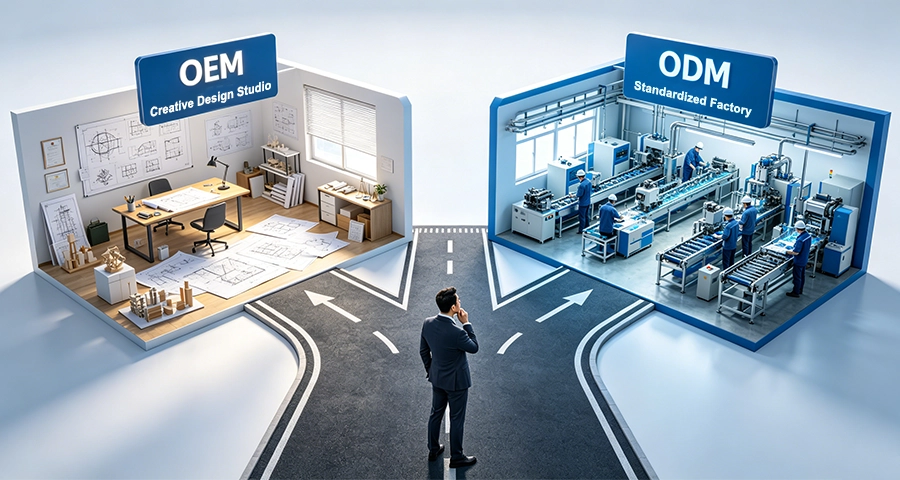
The Core Differences Between Manufacturing Models
When you choose OEM, you must give the factory complete technical drawings. You own the intellectual property. The factory builds the machines exactly to your specs. When you choose ODM, you pick from an existing catalog. You can change the color or the logo, but the core design belongs to the factory. Many buyers now use a hybrid approach. They use a standard ODM body for their commercial kitchen equipment. Then, they add custom OEM branding and special surface finishes. This hybrid method saves money. It also keeps the equipment looking unique. The choice between models dictates your core business focus. An OEM model demands strong internal product engineering. An ODM model shifts your business focus entirely toward marketing, distribution, and customer acquisition. I once worked with a client who wanted a custom oven but had no engineers. We had to explain that ODM was the only safe path for them.
| Feature | OEM Model | ODM Model |
|---|---|---|
| Product Design | You provide full drawings | Factory provides models |
| Intellectual Property | You own it completely | Factory owns base design |
| Business Focus | Product engineering | Marketing and distribution |
| Customization Level | Fully custom | Simple surface changes |
Time-to-Market vs. R&D Costs: A Side-by-Side Comparison?
Worried about high costs? Spending too much on molds can kill your cash flow before you sell one unit. Here is how to plan your budget properly.
The initial investment for OEM is significantly higher due to custom tooling costs. ODM requires less upfront capital and allows for a faster market launch, taking one to four months compared to OEM’s four to eight months.
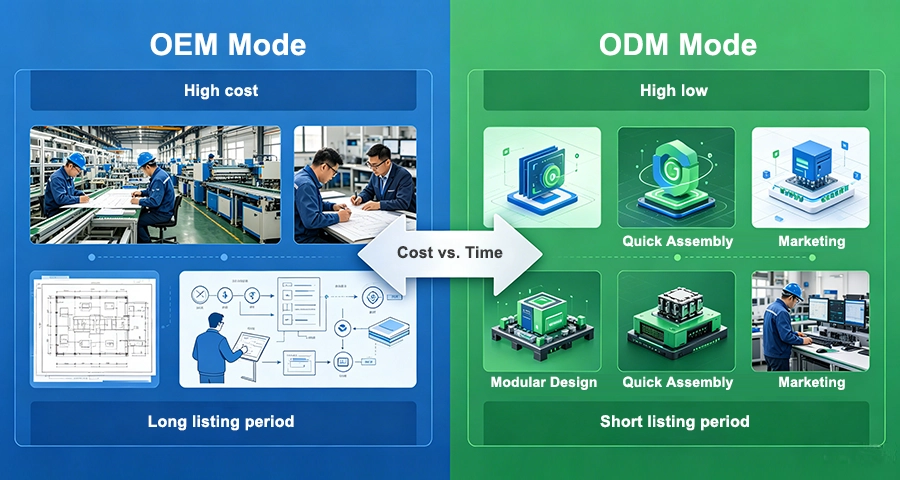
Breaking Down the Financial Investment
The initial investment for OEM is very high. You must pay for research, development, and custom tooling costs. You are building something from nothing. This process takes a lot of time. A normal OEM cycle takes four to eight months. The factory must test the prototypes. They must ensure the machines meet global safety standards. ODM requires much less upfront capital. The factory already paid for the molds. The factory already tested the safety. You skip the long research phase completely. This is why ODM allows for a much faster time-to-market. You can start selling in one to four months. I always ask buyers about their timeline. If you have a trade show next month, you cannot choose OEM. For buyers who want to purchase low and distribute high, ODM often provides a faster return on investment.
| Cost Factor | OEM (Custom Build) | ODM (Existing Build) |
|---|---|---|
| Research Costs | Very high | Zero |
| Tooling and Molds | Paid by the buyer | Paid by the factory |
| Time to Market | Four to eight months | One to four months |
| Initial Capital | Large amount needed | Small amount needed |
Why Kitchen Equipment Distributors Choose OEM to Scale Their Brands?
Tired of price wars? Selling the exact same items as everyone else destroys your profit margins. Creating exclusive products is the only way to survive.
OEM manufacturing provides exclusive product differentiation and tighter control over quality standards. ODM products carry the risk of market saturation because identical base models can be sold to your direct competitors.
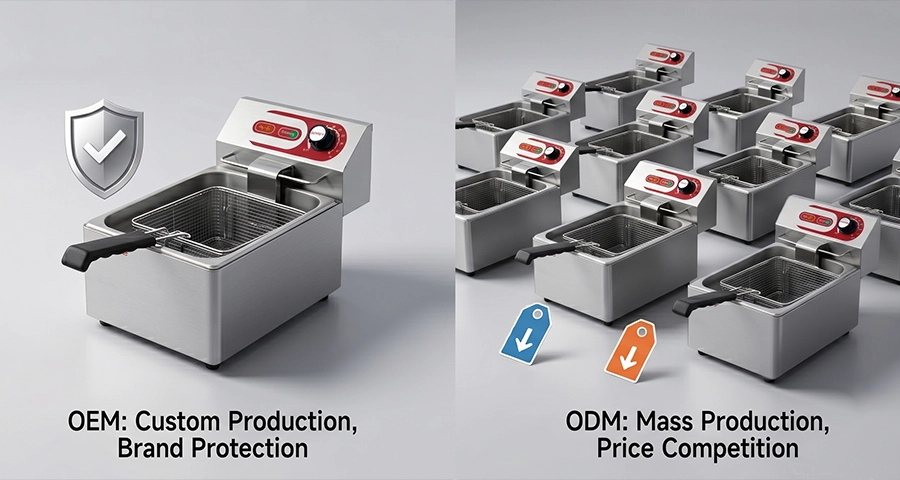
Securing Your Market Position and Brand Value
OEM solves the problem of market saturation. It provides exclusive product differentiation. You control the exact metal thickness, the heating elements, and the strict quality standards. Buyers in developed countries are very sensitive to quality. OEM lets you guarantee that high quality. The food industry is changing very fast. The integration of automated cooking stations and robotics in quick-service restaurants requires strict OEM frameworks. You must protect your proprietary spatial dimensions, workflow integration, and customized safety protocols. I saw a large buyer find his exact deep fryer model on a competitor’s website for a lower price. That is the big risk of ODM. Identical base models can be sold to your competitors. Market saturation happens fast. If you want to build a major brand, you eventually need to move to OEM. This stops competitors from copying your success.
| Brand Benefit | OEM Advantage | ODM Risk |
|---|---|---|
| Exclusivity | Completely exclusive to you | Sold to many different buyers |
| Price Control | You set the market price | Forced into daily price wars |
| Brand Value | Builds high brand equity | Low long-term brand equity |
| Competitor Action | Copying is strictly illegal | Copying is very common |
How Restaurant Chains Optimize Operations with Custom ODM Equipment?
Are your kitchen machines constantly breaking down? Frequent downtime hurts restaurant operations and makes customers angry. Smart equipment choices can fix this problem fast.
The rising demand for IoT-enabled smart equipment drives traditional brands toward ODM partnerships. This compensates for a lack of in-house software engineering. Chains also use ODM to meet stringent global energy efficiency regulations easily.
The Shift in Chain Purchasing Strategies
Restaurant chains face big challenges today. They need smart technology, but they do not build software. The rising demand for smart commercial kitchen equipment is driving traditional brands toward ODM partnerships. They do this to compensate for a lack of in-house software and electronics engineering expertise. Factories develop the smart screens and controls. Chains can just buy these ODM models and get smart technology instantly. Additionally, stringent global energy efficiency regulations are forcing manufacturers to standardize eco-friendly insulation and advanced compressor technologies across their baseline ODM catalogs. However, as chains grow larger, they often change their strategies. They start adopting modular OEM equipment designs with interchangeable components. This helps them mitigate supply chain risks. It also reduces long-term maintenance downtime. They start with ODM to grow fast, then transition to OEM to control their operations completely. I have watched many chains follow this exact path to success.
| Operational Need | ODM Solution |
|---|---|
| Smart Integration | Factory provides ready smart systems |
| Energy Efficiency | Standardized eco-friendly equipment designs |
| Cost Control | No software research expenses needed |
| Fast Rollout | Immediate equipment stock availability |
How to Choose a Reliable Source Factory for Your Kitchen Equipment Needs?
Frustrated by delayed shipments? Poor communication with your supplier causes endless headaches and lost sales. You must find a factory that actually listens to you.
Choose a reliable source factory that offers both OEM and ODM options. The factory must have strong quality control, strict international certifications, and clear communication to prevent delayed delivery and ensure stable supply chains.
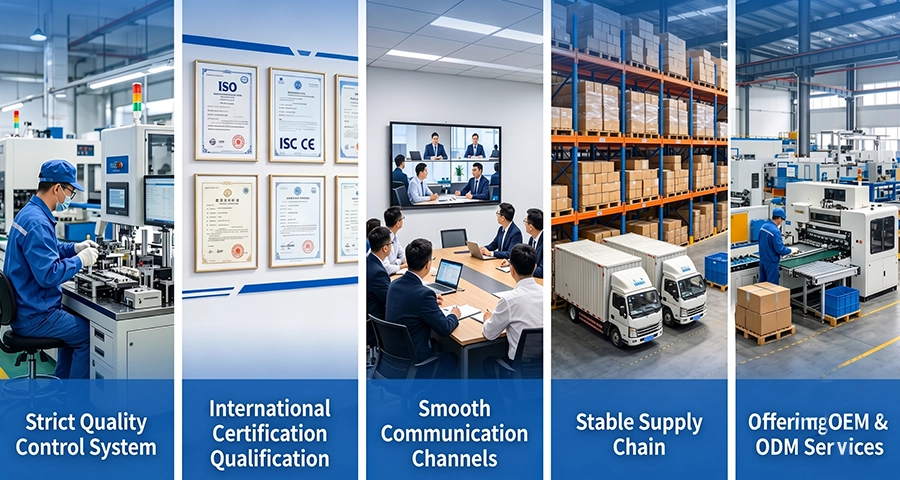
Key Factors in Selecting a Manufacturing Partner
Communication is always the biggest pain point in international trade. You need a supplier who replies fast and understands your rigorous standards. Delayed delivery happens when factories do not control their own supply chain. A reliable factory controls the entire process from start to finish. You must also check their certifications carefully. For developed countries, you cannot sell products without the right marks. Ensure the equipment meets safety standards. When you search online, do not just look at the lowest price. Look for stable supply chains. Look for a true partner who wants to grow with you. A good factory will offer both OEM and ODM paths. This flexibility allows your business to scale over time. I always advise buyers to visit the factory if possible, or at least have a detailed video call. This builds trust and ensures everyone understands the project goals clearly.
| Factory Checklist | Why It Matters for Buyers |
|---|---|
| Direct Ownership | Prevents delays and ensures quality |
| Strict Certifications | Guarantees legal market entry |
| Clear Communication | Solves problems before they grow |
| Flexible Models | Handles both ODM and OEM orders |
Conclusion
Choosing between OEM and ODM dictates your business future. Evaluate your budget, timeline, and engineering skills carefully. Pick the model that best fits your kitchen equipment brand goals today.