
High energy bills ruin restaurant profits. You watch money burn with old gas stoves. I will show you why upgrading to induction equipment saves your business money.
Chain restaurants should choose electromagnetic heating. Induction heating transfers 85% to 90% of energy directly to the pan. Traditional gas wastes up to 70% of heat. Induction saves money, increases cooking speed, and makes kitchens safer for your staff.
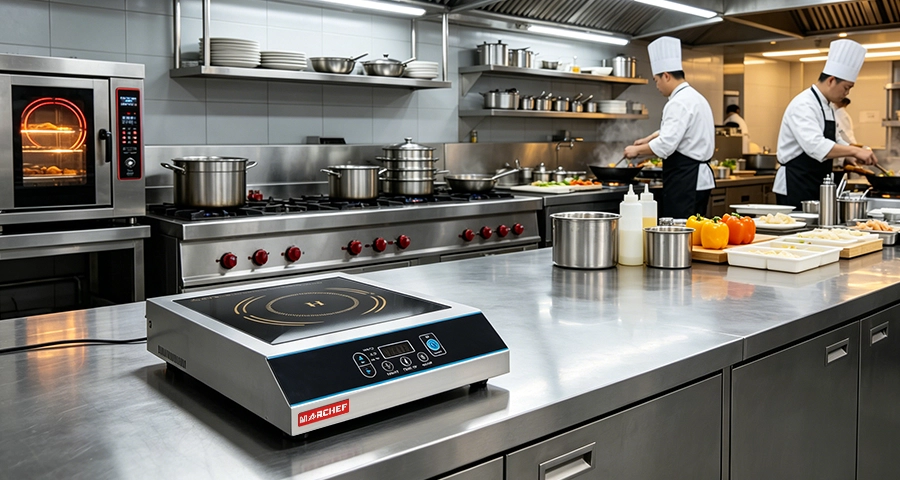
Many distributors from Europe ask me about this choice. I understand your concerns about quality and cost. Let us look closely at how these two cooking methods compare for big restaurant chains.
Energy Efficiency Showdown: Monthly Utility Costs for Chain Restaurants?
High utility bills eat your profit margin. Gas wastes energy into the air. Induction heating stops this waste and lowers your monthly costs.
Induction cooking reaches 85% to 90% energy efficiency. It transfers electromagnetic energy right into the cookware. Traditional gas systems lose 60% to 70% of energy to the air. This makes induction much cheaper for monthly utility costs.
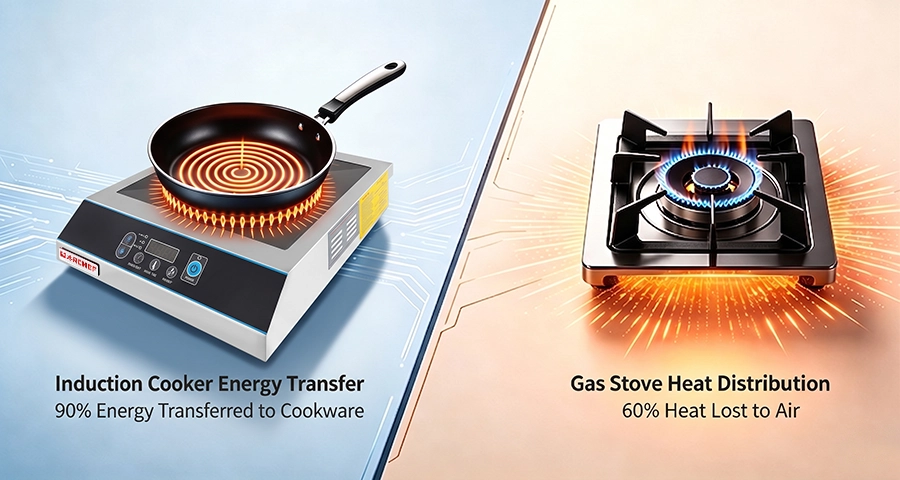
The Cost of Wasted Heat
I run two factories in China. I see how different machines work. Traditional gas burners waste money. They heat the air instead of the food. You pay for that lost heat. Electromagnetic induction works differently. The energy goes straight into the metal pot.
Speed Means Profit
A commercial 3.5 kW induction burner is very fast. It boils large pots of water almost two times faster than a standard 12,000 BTU gas stove. This speed matters for your business. Fast cooking means you serve more food. You increase table turnover rates during busy dinner hours. European buyers tell me speed is important. They want machines that help restaurants make more money.
| Cooking Method | Energy Efficiency | Heat Lost to Air | Boiling Speed |
|---|---|---|---|
| Electromagnetic Induction | 85% – 90% | Very Low | Fast (3.5 kW) |
| Traditional Gas | 30% – 40% | 60% – 70% | Slower (12,000 BTU) |
This table shows clear facts. You save money every month when you stop heating the air. You also serve customers faster.
Precision and Speed: Achieving Food Quality Consistency Across All Branches?
Bad food ruins your brand reputation. Chefs make mistakes with manual gas flames. Smart induction tools give you exact control every time.
Digital temperature controls on induction equipment allow exact thermal settings. This stops hot spots and makes food quality the same in every restaurant. You can automate cooking steps, which reduces the need for expensive chefs.
Digital Control for Perfect Food
Chain restaurants need the same taste everywhere. A burger in Berlin must taste like a burger in Munich. Gas flames are hard to control. Chefs must guess the heat level. Electromagnetic equipment uses digital temperature controls. You can set the exact heat. The machine repeats this heat perfectly every time. This prevents hot spots on the griddle.
Easy Training for New Staff
Good chefs cost a lot of money. New workers need long training. Smart induction equipment fixes this problem. These machines have programmable heating profiles. You can automate hard cooking steps. A new worker just pushes a button.
| Feature | Electromagnetic Heating | Traditional Gas |
|---|---|---|
| Temperature Control | Exact digital settings | Manual flame guess |
| Cooking Automation | High (programmable buttons) | Low (manual work) |
| Staff Skill Needed | Low skill required | High skill required |
I sell many machines to big buyers. They love simple tools. Less training means lower costs. Your food stays perfect, and your customers stay happy.
Kitchen Safety and Comfort: Reducing Heat Output and Fire Hazards?
Hot kitchens make workers tired and angry. Open flames cause dangerous grease fires. Induction cooking removes flames and keeps your kitchen cool and safe.
Gas burners push massive waste heat into the kitchen. They can raise the temperature by 8°C. Induction systems transfer almost no heat to the air. They have no open flames, which stops grease fires and dangerous soot.
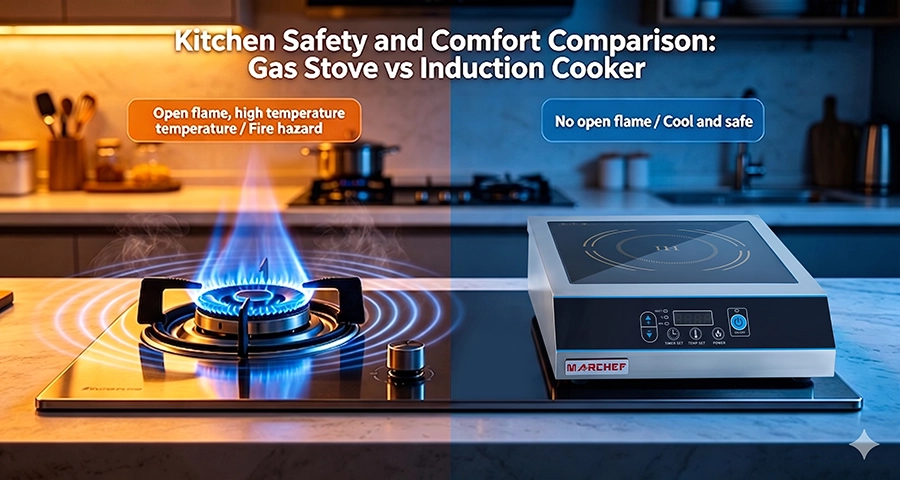
Keeping the Kitchen Cool
A hot kitchen is a bad workplace. Gas burners dump massive amounts of waste heat. This heat can raise a small kitchen’s temperature by up to 8 degrees Celsius. You must spend a lot of money on air conditioning. Electromagnetic induction solves this problem. It transfers very little heat to the air. Your cooling bills go down. Your staff feels much better.
Stopping Fire Dangers
Safety is the most important thing. Traditional gas uses open flames. Flames can easily start grease fires. Gas also makes black soot. Induction cooktops have a flameless operation. There is no fire risk. You can put prep areas right next to the cooker. This saves space in small kitchens.
| Safety Factor | Electromagnetic Cooking | Gas Cooking |
|---|---|---|
| Waste Heat Added | Very Low | Very High (up to +8°C) |
| Fire Hazard | Flameless (No risk) | High (Open flames) |
| Cooling Costs | Low | High |
I visit many kitchens. The induction kitchens are quiet, cool, and clean. This is what modern restaurants need.
Navigating Global Environmental Standards: The Shift Towards Eco-Friendly Kitchens?
Strict new laws ban old kitchen tools. Failing to change means you cannot open new branches. Eco-friendly induction heating protects your business from these laws.
Many cities now ban new commercial natural gas hookups. Chain restaurants must use electromagnetic heating to follow new building codes. Induction produces only steam. It makes no carbon monoxide or nitrogen dioxide, so you need 80% less exhaust ventilation equipment.
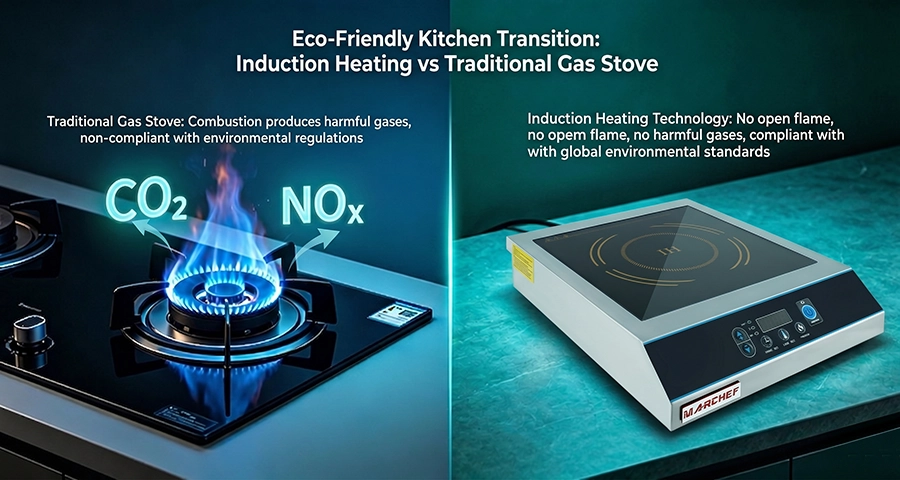
The Law is Changing Fast
Many European buyers buy from my factory. They face new rules. Many cities stop new gas lines. They ban natural gas hookups for new buildings. Expanding chain restaurants face big regulatory pressures. If you use gas, you might not be able to build a new branch. Electromagnetic heating is the safe choice. It prepares your business for future building codes.
Breathing Clean Air
Gas stoves burn fuel. This burning makes harmful gases. It makes carbon monoxide and nitrogen dioxide. You must buy huge exhaust hoods to pull this bad air out. Induction cooking produces only steam. It has no harmful combustion byproducts.
| Environmental Area | Induction Systems | Gas Systems |
|---|---|---|
| Legal Future | Allowed everywhere | Banned in many new areas |
| Harmful Gases | None (Steam only) | Carbon monoxide, Nitrogen dioxide |
| Ventilation Needed | Reduced by up to 80% | 100% full capacity needed |
Because induction is so clean, restaurants can reduce their exhaust ventilation needs by up to 80%. This saves thousands of dollars when building a new kitchen.
Installation Requirements and Maintenance Costs: A Guide for Distributors?
Kitchen upgrades hide big secret costs. Broken machines stop your business. You must know the real electrical and repair costs before you buy new equipment.
Changing to induction requires big electrical upgrades. You must install high-capacity three-phase power systems. Also, induction surfaces need less daily cleaning. But repairing broken induction parts requires special electronic technicians, while gas uses cheaper mechanical parts.
The True Cost of Power
Distributors want facts. I always tell the truth about my products. Moving a whole kitchen from gas to induction is hard. It requires a big electrical infrastructure upgrade. You cannot use normal wall plugs. You must install high-capacity three-phase power systems. This costs money. You must add this cost to your initial capital expenditure budget.
Cleaning and Fixing Machines
Induction cookers have flat glass surfaces. Daily cleaning is very fast and requires less labor. You just wipe it clean. Gas stoves have many hard parts to scrub. However, maintenance is different. If an induction unit breaks, you need highly specialized electronic technicians. They must fix costly circuit boards. Gas ranges just use cheap mechanical parts.
| Cost Type | Induction Equipment | Gas Equipment |
|---|---|---|
| Initial Setup | High (Three-phase power needed) | Low (Standard gas lines) |
| Daily Cleaning | Fast and cheap | Slow and hard |
| Repair Costs | High (Special boards and techs) | Low (Cheap mechanical parts) |
You must think about both installation and future repairs. Make sure your local technicians can fix electronic boards before you buy.
Conclusion
Electromagnetic heating saves energy, cooks faster, and keeps kitchens cool. Gas has cheaper repairs but hurts the environment. Choose induction to grow your chain safely into the future.