
Buying the wrong ice maker wastes money and ruins drinks. Your customers will complain about warm beverages, and your electricity bill will soar. I will show you how to pick the perfect machine.
A commercial ice machine buying guide helps you choose the right equipment. You must evaluate ice type, daily capacity, cooling methods, and sanitation standards. It ensures your business meets customer demand. It keeps energy costs and maintenance low.
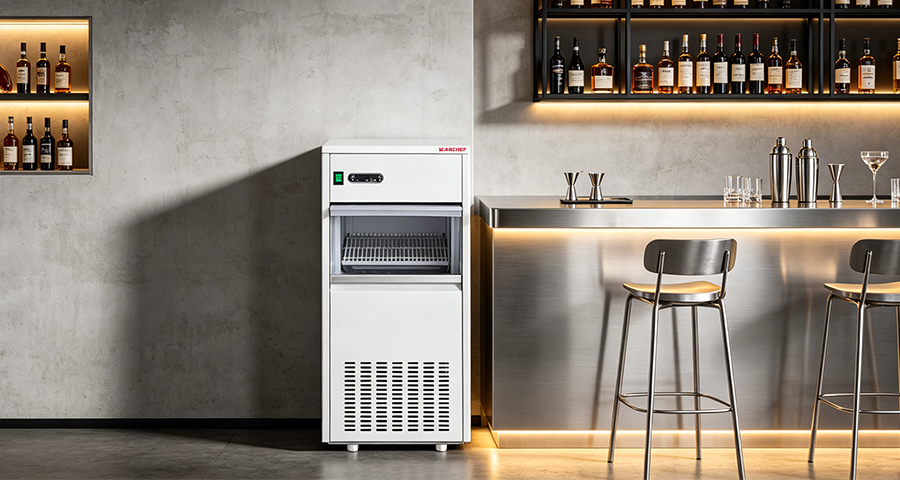
I know choosing an ice machine is a big decision. You need to ask the right questions before you spend your budget. I will show you the main factors you must consider.
How Do You Match Ice Forms with Specific Food & Beverage Concepts?
Wrong ice melts too fast. Your premium cocktails lose their taste quickly. I will teach you how to match ice shapes to your drinks perfectly.
Different drinks need different ice shapes. Crescent ice is dense and melts slowly. This makes it perfect for premium cocktails. Flake ice is soft and molds easily. It works best for seafood displays and healthcare uses.
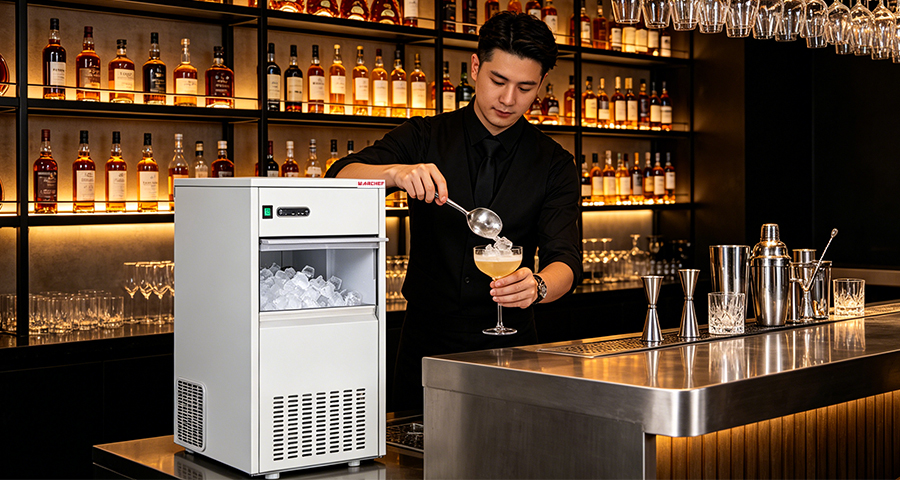
The Impact of Ice Shape
I run a kitchen equipment factory in Zhongshan. I see many buyers order the wrong machine. They do not understand ice shapes. The ice shape changes the drink experience. You must match the ice to your menu.
Crescent ice is a great choice. It has a hard and dense structure. It melts slower than standard cubes. This slow melting prevents rapid dilution in premium cocktails. Your customers enjoy better tasting drinks.
Other ice types serve different needs. Nugget ice is soft and chewable. Fast food chains use it for sodas. Flake ice cools food quickly. Supermarkets use it for fresh seafood displays.
Here is a simple table to guide your choice:
| Ice Type | Best Use | Melting Speed |
|---|---|---|
| Crescent | Cocktails, high-end drinks | Slow |
| Standard Cube | General drinks, spirits | Medium |
| Nugget | Sodas, smoothies | Fast |
| Flake | Seafood, salad bars | Very Fast |
You must choose the shape that fits your daily business needs.
How Do You Right-Size Ice Production for High-Volume Chains?
Running out of ice during rush hour is a nightmare. You lose sales and make customers angry. I will help you calculate the exact capacity you need.
You right-size ice production by calculating your peak hour demand. You must add an extra 20 percent to 30 percent buffer capacity. This extra capacity prevents ice shortages during your busiest rush periods.
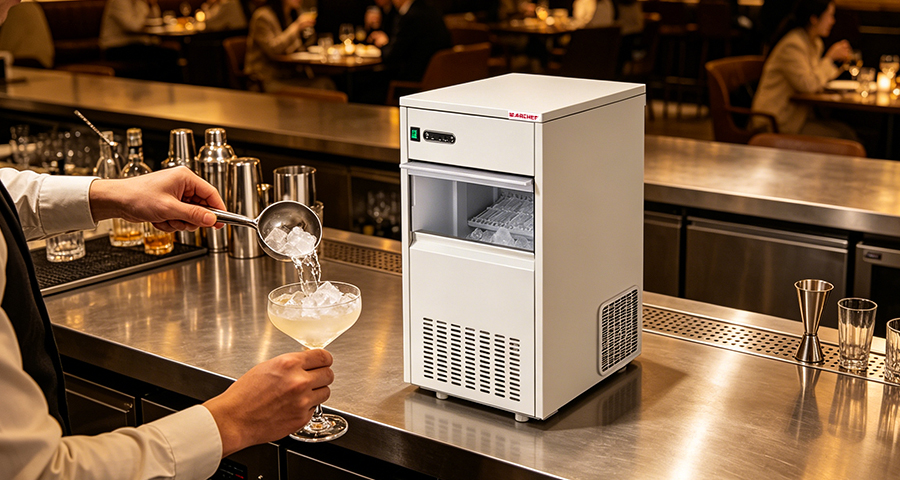
Planning Your Daily Ice Volume
You need to plan your daily ice volume carefully. I always tell my B2B clients to look at their busiest days. You cannot buy a machine based on a quiet Monday. You must plan for a busy Friday night.
First, you calculate your peak hour demand. A restaurant needs about 1.5 pounds of ice per meal. A bar needs about 3 pounds of ice per seat. You multiply these numbers by your total customers.
Second, you must add an extra 20 percent to 30 percent buffer capacity. This buffer prevents shortages during unexpected rush periods.
Sometimes you need a very high-capacity machine. This large machine generates heat and noise. You should consider a remote condenser configuration. This setup moves the heat and noise outside the food service area.
| Business Type | Ice Need Per Customer | Buffer Needed |
|---|---|---|
| Restaurant | 1.5 lbs | 20% |
| Bar | 3.0 lbs | 30% |
| Hotel | 5.0 lbs per room | 20% |
You must think about your future growth. A successful restaurant serves more customers every year. You should buy a machine that can handle this future growth. Replacing a small machine after one year is a huge waste of money.
How Do You Evaluate Energy Efficiency and Maintenance Costs?
High electricity and repair bills will kill your profit margin. Ignoring maintenance causes expensive machine breakdowns. I will show you how to lower your total costs.
You evaluate costs by looking at cooling methods and maintenance needs. Air-cooled commercial ice machines lower utility bills. They do not waste water. A strict maintenance schedule prevents mineral buildup. It keeps the compressor running well.
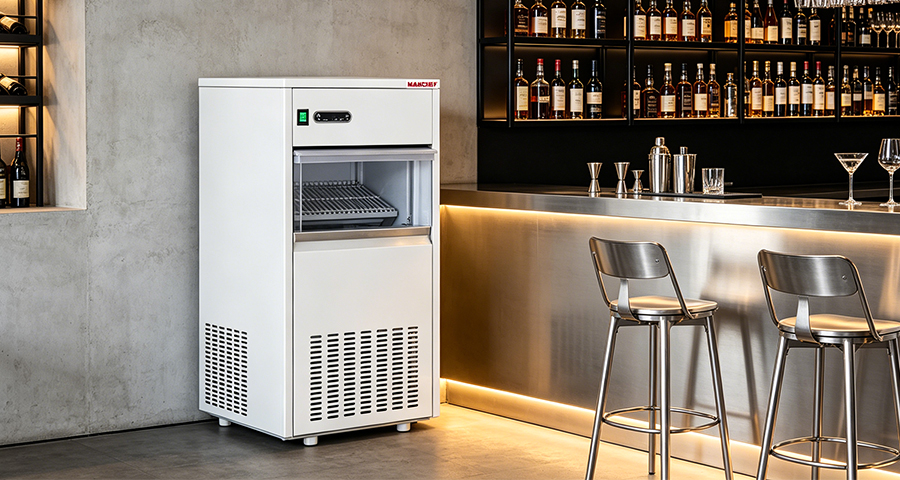
Understanding the True Costs
The price tag is not your only cost. You must look at the total cost of ownership. This cost includes electricity, water, and repairs. I supply refrigeration equipment to foreign buyers. These buyers care deeply about long-term costs.
Cooling methods matter a lot. Air-cooled commercial ice machines reduce your total cost. They lower municipal utility bills. Water-cooled units consume continuous water resources. They cost more to run in most cities.
Maintenance is also a big part of the cost. You must follow a rigorous maintenance schedule. You should sanitize water lines twice a year. You should replace water filters every six months. This basic work prevents mineral buildup. It preserves long-term compressor efficiency.
| Cooling Method | Running Cost | Water Usage |
|---|---|---|
| Air-Cooled | Low | Low |
| Water-Cooled | High | High |
| Remote | Medium | Low |
Energy efficient machines also help your brand image. Customers like green businesses. You save money and build a good reputation at the same time. You will pay less for emergency repairs. Your machine will last for many years.
How Do You Navigate International Standards for Food Safety?
Dirty ice makes people sick. Failed health inspections ruin your business reputation. I will guide you on how to meet international safety rules.
You must choose ice machines made with ABS antimicrobial materials. These materials prevent bacterial growth. You also need systems using R290 hydrocarbon refrigerants. This gas lowers your carbon footprint. These choices ensure you meet strict NSF and ETL rules.
Meeting Global Health Regulations
Ice is food. You must treat it with strict hygiene. Many distributors ask me about safety rules. They know that dirty ice ruins a brand.
You must look at the interior materials. Good ice machines use ABS antimicrobial materials inside. These materials meet essential NSF and ETL sanitation regulations. They safely prevent biofilm and bacterial growth.
Environmental rules are also changing quickly around the world. You should buy systems with advanced R290 hydrocarbon refrigerants. This gas lowers your carbon footprint. It ensures strict compliance with incoming global environmental mandates.
You can also use smart technology to stay safe. Many modern machines integrate smart IoT diagnostics into the equipment. This technology allows operators to monitor real-time performance. You can prevent mechanical failures before they disrupt your service.
| Feature | Benefit | Standard Met |
|---|---|---|
| ABS Material | Stops bacteria | NSF / ETL |
| R290 Gas | Protects earth | Global Eco Rules |
| IoT Sensors | Fixes problems early | Operational Safety |
Your kitchen stays clean and safe. You will pass every health inspection easily.
What Should Kitchen Equipment Distributors Look For in an OEM Manufacturer?
Unreliable suppliers cause delayed deliveries. Lack of communication leaves you stuck with broken machines. I will show you how to find a strong factory partner.
Distributors should partner with an OEM manufacturer. The factory must provide comprehensive warranties and accessible replacement parts. You need a factory that offers technical support training and modular scalability. This secures higher profit margins and long-term stability.
Building a Stable Supply Chain
I know the pain points of foreign buyers. You hate delayed deliveries. You hate poor communication. You need a true partner. You do not just need a seller.
Partnering with the right OEM manufacturer guarantees long-term operational stability. You must look for a factory that provides comprehensive warranties. You also need accessible replacement parts. Clear certification compliance is a must. If the factory cannot provide these things, you will lose money on repairs.
Equipment distributors want to grow their business. You secure higher profit margins by selecting OEMs that offer robust technical support training. Modular scalability is also important. This means you can expand your product line easily in the future.
| Factory Quality | Distributor Benefit |
|---|---|
| Full Warranty | Lower risk |
| Fast Parts Delivery | Happy customers |
| Tech Training | Stronger sales team |
| Clear Certificates | Easy customs clearance |
A strong factory supports your sales team. A strong factory helps you win more large company buyers. You build a stable supply chain together. Good communication is the final key. You need a factory boss who understands your market. We always talk directly with our distributors to solve problems fast.
Conclusion
Choosing the right commercial ice machine requires careful planning. You must check ice types, calculate capacity, manage costs, ensure safety, and find a reliable OEM factory partner.