
Do slow cook times create long lines in your shop? Bottlenecks hurt food quality, frustrate your staff, and cut your daily profits. You need faster ticket times without sacrificing taste.
A commercial speed oven combines microwave energy with high-velocity hot air impingement to cook foods up to ten times faster than standard convection units. It cuts ticket times to under two minutes, eliminates expensive ventilation hood costs through built-in catalytic converters, and delivers full equipment payback within six to twelve months.
I run two commercial kitchen equipment factories, and I see buyers buy the wrong speed ovens every month. They look only at the price tag, and they forget power limits, spare parts, and service downtime. I wrote this guide to share what I learned on the factory floor so you can choose the right unit for your line.
Can Speed Ovens Thaw and Brown Food in 60 to 90 Seconds?
Do frozen breakfast sandwiches come out soggy in your microwave? Standard ovens take ten minutes to toast them, which backs up morning orders. Your guests walk out empty-handed.
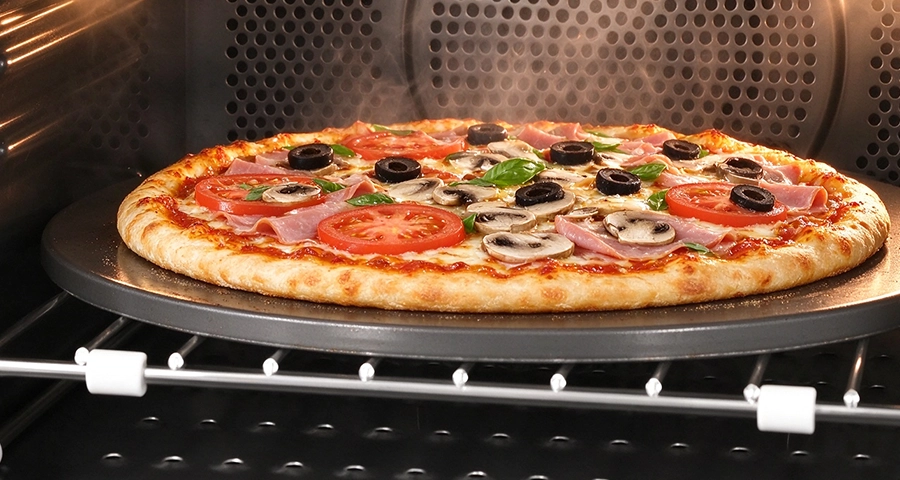
Speed ovens combine microwave energy with high-velocity impingement air to thaw frozen food cores while caramelizing surface sugars within 60 to 90 seconds. The microwave targets moisture inside the food, while hot air jets crisp the exterior starch at the exact same time.
Understanding the Physics of Rapid Cooking
I tested rapid cook cycles in our lab for three months. A standard microwave heats water molecules fast, but it leaves bread rubbery and wet. A convection oven browns bread well, but it heats cold centers very slowly.
Speed ovens solve this problem by running both systems together. Top and bottom jet plates push hot air at high speeds directly onto the food surface. This fast air strips away the cold boundary layer of air around the food. At the same time, microwave energy passes right through the surface and excites water molecules in the center. The core thaws immediately, and the impingement air crisps the crust.
| Food Item | Standard Convection Time | Speed Oven Cook Time | Exterior Finish Quality |
|---|---|---|---|
| Frozen Breakfast Burrito | 12 to 15 Minutes | 65 Seconds | Crisp Tortilla Shell |
| 8-Inch Parbaked Pizza | 7 to 9 Minutes | 80 Seconds | Melted Cheese, Brown Crust |
| Raw Chicken Breast Cutlet | 10 to 12 Minutes | 90 Seconds | Juicy Meat, Brown Edges |
| Frozen Toasted Sandwich | 6 to 8 Minutes | 50 Seconds | Melted Core, Golden Bread |
You must balance microwave percentages and convection air speed. If you set the microwave level too high, the cheese boils over before the crust browns. If you set the air velocity too high, the top burns while the center stays cold. I always recommend saving preset recipes with fixed stages into the digital controller.
Should You Choose 1-Phase or 3-Phase Power for Your Kitchen?
Did you ever buy a high-power machine only to find your wall outlet cannot run it? Rewiring your kitchen panel costs thousands of dollars and delays your store opening by weeks.
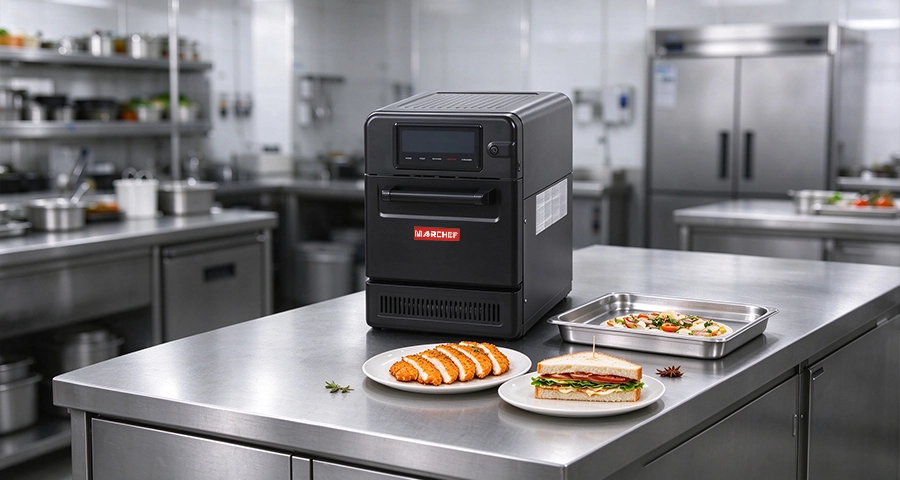
Single-phase power fits small kiosks and retrofits because it runs on standard 208 to 240 volt lines with 20 to 30 amps. Three-phase power delivers steady electrical current for busy commercial kitchens, which keeps chamber recovery temperatures stable during nonstop ticket orders.
Matching Electrical Loads to Kitchen Volume
I once shipped twenty single-phase speed ovens to a busy sandwich chain. The owner called me two weeks later because ticket times doubled during the lunch rush. The ovens worked fine during slow hours, but they lost heat during back-to-back orders.
Single-phase units work well when you cook one item every five minutes. The heating element has enough time to recover heat between door openings. But when your staff opens the door every sixty seconds, cool room air rushes into the chamber. A single-phase heating element cannot restore internal cavity temperature fast enough. The oven then relies too much on microwave power, which makes the food soft instead of crispy.
| Electrical Parameter | Single-Phase (1-Phase) | Three-Phase (3-Phase) |
|---|---|---|
| Voltage Supply | 208V – 240V | 380V – 415V (or 208V 3-Phase) |
| Breaker Size | 20A to 30A Dedicated | 16A to 32A per Phase |
| Best Kitchen Type | Coffee Shops, Kiosks, Bars | Fast Food Chains, High-Volume Lines |
| Temperature Recovery | Slower under heavy continuous use | Instant recovery during peak ticket volume |
| Installation Barrier | Very low; existing outlets often work | Requires industrial power drops |
Choose single-phase units only if your menu treats warm food as an add-on item. If hot food drives your primary sales volume, pay for the three-phase power drop. It protects your cooking speed when customer lines stretch out the front door.
How Does Dual Magnetron Redundancy Protect Your Daily Uptime?
What happens when your only cook station goes dark during your busiest hour? Your kitchen stops taking orders, your staff panics, and you lose revenue that you can never recover.
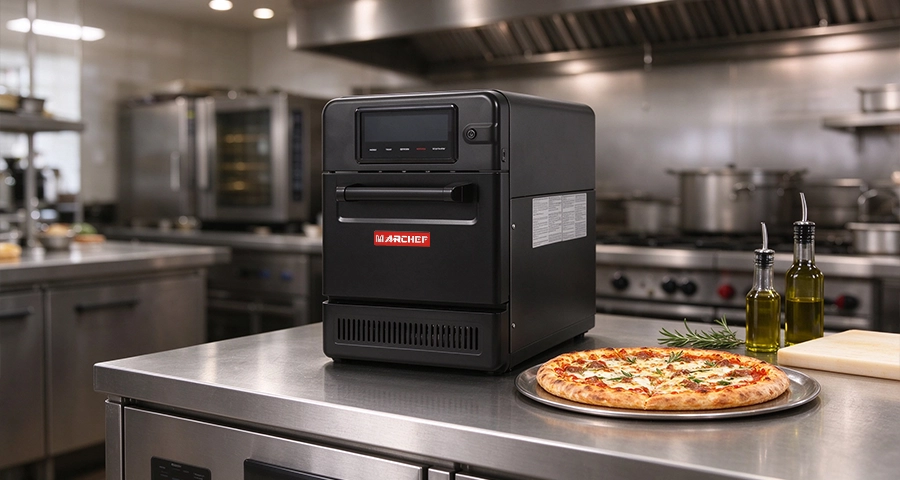
Dual magnetron speed ovens use two separate microwave tubes to distribute energy evenly across the cooking chamber. If one magnetron fails during service, the oven continues running on the second tube at reduced power, which keeps your kitchen open until a technician arrives.
Waveguide Engineering and Kitchen Reliability
In our factory testing room, we deliberately disconnect one magnetron to check emergency run modes. In a single-magnetron oven, a tube blowout stops the entire station. You cannot cook food, and you must refund customer tickets immediately.
A dual-magnetron setup gives you safety through redundancy. The system controller detects the dead tube and alerts the operator on the screen. It automatically adjusts cook times to let you finish your shift. Furthermore, dual magnetrons deliver better cooking results every day. Two microwave sources create cross-phase microwave patterns inside the cavity. This design eliminates cold spots in thick meats without using moving turntables or fragile rotating antenna motors.
| Component System | Single Magnetron Design | Dual Magnetron Design |
|---|---|---|
| Failure Consequence | Total station shutdown | Half-power emergency run mode |
| Heat Field Uniformity | Prone to standing-wave cold spots | Cross-phase balanced energy pattern |
| Internal Moving Parts | Often requires rotating antennas | Static waveguides with zero moving parts |
| Tube Service Life | Higher individual heat stress | Shared workload extends tube life |
Look closely at how the factory cools these magnetrons. Heavy-duty cooling fans with high air movement ratings protect the high-frequency inverter boards from excess heat. Heat kills electronic parts faster than cooking hours do.
What Are the Real Wear Parts and Warranty Costs Over Time?
Do you know what this machine will cost you after the warranty expires? Cheap machines often hide high replacement part prices that wipe out your initial purchase savings within two years.
High-frequency wear parts include silicone door gaskets, jet plates, catalytic grease filters, and non-stick cavity liners. These basic consumables make up most regular operating costs, while magnetrons, blowers, and main control boards represent major repair costs after three to five years of heavy use.
Planning Your Five-Year Cost of Ownership
I always tell buyers to look at consumable costs before they look at machine prices. A speed oven operates under high heat, air pressure, and grease vapor. Soft parts wear out naturally under these harsh conditions.
The silicone door gasket takes the most abuse. Staff slam the heavy door hundreds of times a day. If the gasket tears, microwave energy and hot air escape. This drops cooking heat and creates a safety hazard. Non-stick cavity liners protect the stainless steel walls from burnt grease splatters. If your team does not wipe them daily, baked-on grease destroys the non-stick coating within three months.
| Part Description | Replacement Cycle | Failure Symptom | Maintenance Action |
|---|---|---|---|
| Silicone Door Gasket | 6 to 12 Months | Steam leaks, heat loss, uneven cook | Inspect daily, wipe with mild detergent |
| Catalytic Air Filter | 12 to 24 Months | Smoke buildup, grease smells | Clean weekly per factory guidelines |
| Non-Stick Cavity Liners | 3 to 6 Months | Peeling surface, carbon buildup | Remove and hand-wash every night |
| Magnetron Tubes | 3 to 5 Years | Long cook times, microwave error codes | Check cooling fan filters monthly |
Buy units that use standardized, modular microwave generation assemblies. Avoid brands that lock their machines with proprietary software chips. Proprietary chips force you to buy parts from one vendor, which leads to long shipping delays and high repair bills.
Can Ventless Operation Really Deliver Fast Equipment Payback?
Do you want to add hot food to your menu without spending fifty thousand dollars on roof ductwork? Traditional kitchen ventilation systems require long construction projects and complex building permits that eat up your cash.
Speed ovens feature built-in catalytic converters certified under UL 710B and EPA 202 standards to eliminate grease vapors inside the cooking chamber. This ventless design eliminates the need for expensive Type 1 exhaust hoods, which saves thousands of dollars in ductwork and makeup air costs.
Breaking Down the Math on Hoodless Installation
Traditional cooking gear requires a dedicated exhaust hood with roof fans and fire suppression pipes. Installing a Type 1 exhaust hood costs between $1,500 and $3,000 per linear foot. If your shop sits inside a historic building, an airport, or an office lobby, running ductwork to the roof is often impossible.
A ventless speed oven pulls air from the cook cavity through an internal catalytic converter. The catalyst oxidizes grease molecules, smoke particles, and food odors at high temperatures. The air returns to the room clean and odorless. By skipping the exhaust hood, you cut construction costs and open your business weeks ahead of schedule.
| Expense Category | Traditional Oven with Type 1 Hood | Ventless Speed Oven Setup |
|---|---|---|
| Ventilation Hood Hardware | $6,000 – $12,000 | $0 (Internal Catalyst Built-In) |
| Ductwork and Roof Exhaust Fans | $8,000 – $20,000 | $0 |
| Fire Suppression System | $3,500 – $6,000 | $0 |
| HVAC Make-Up Air Unit | $5,000 – $10,000 | $0 |
| Typical Installation Timeline | 3 to 6 Weeks | 1 Day (Plug and Play) |
When you combine hoodless installation savings with faster customer order delivery, the equipment pays for itself very quickly. You save money on buildout costs on day one, and you serve more customers during peak hours every day after.
Conclusion
Commercial speed ovens boost ticket speed and cut ventilation costs, but picking the right model requires matching electrical supply, dual-magnetron reliability, and simple parts access to your kitchen volume.