
Is slow vegetable preparation hurting your kitchen speed? Hand-cutting wastes money and delays orders. A commercial vegetable slicer fixes this problem. Let us find the perfect machine for you.
To select a commercial vegetable slicer, you must evaluate your daily food processing volume, choose between manual or electric power, and select the right blade types. You also need to check safety features, motor power, sanitation design, and the reliability of your manufacturing partner.
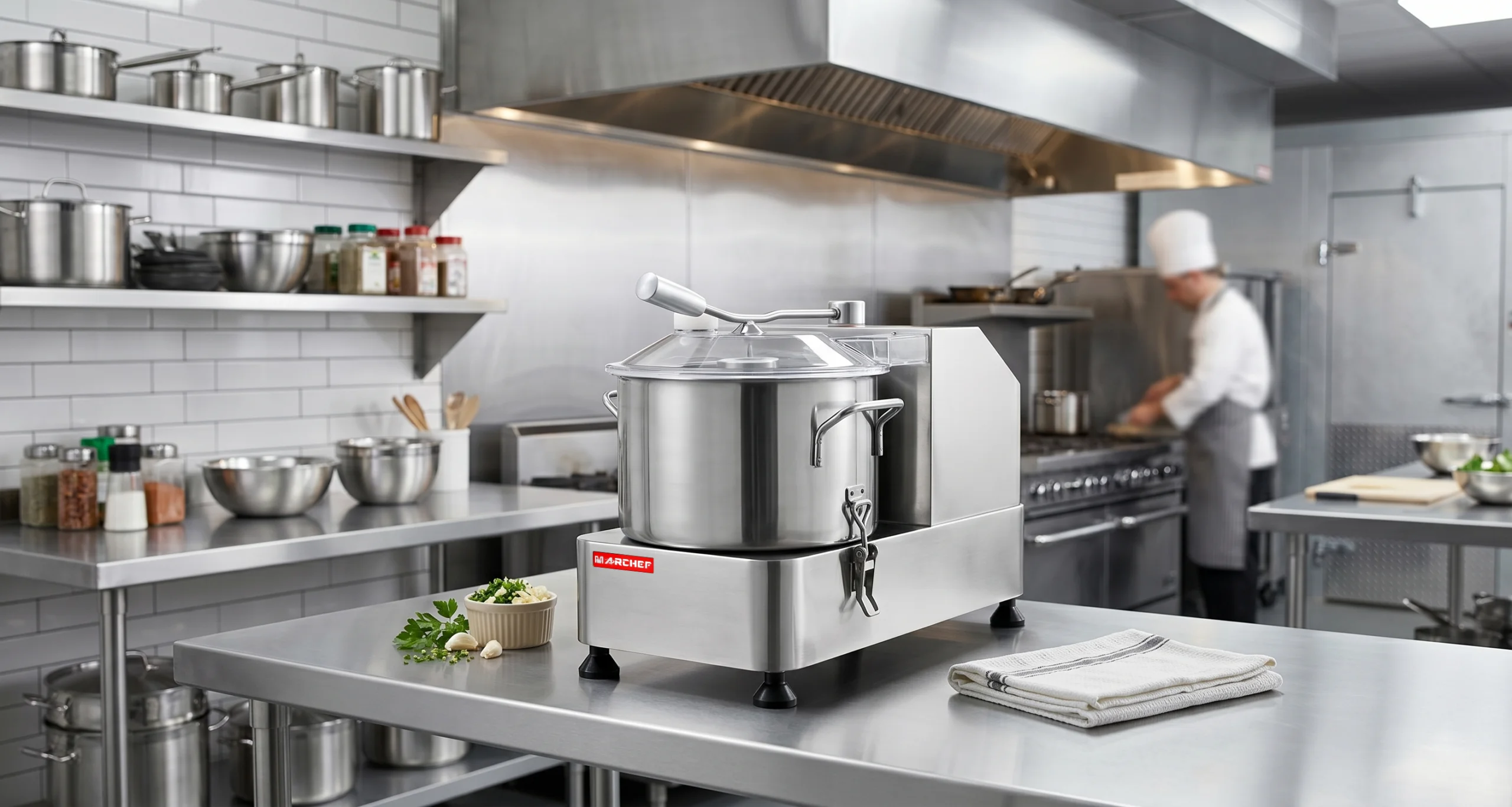
Choosing kitchen equipment is hard work. I talk to buyers from Europe every day at our MARCHEF factory. They all want high quality and good prices. A bad machine breaks down and ruins your service. A good machine makes work fast and easy. I want to share my factory experience with you. Here is what you need to know before you buy.
Assess Your Daily Processing Volume?
Do you buy machines that are too small? A weak machine breaks if you use it too much. You lose money. You must match the machine to your daily needs.
You must match your machine capacity to your daily processing volume. If you prepare less than 50 pounds of food, a manual slicer works well. If you have an intensive, all-day production line, you need a heavy-duty electric slicer.
Understanding Volume and Space
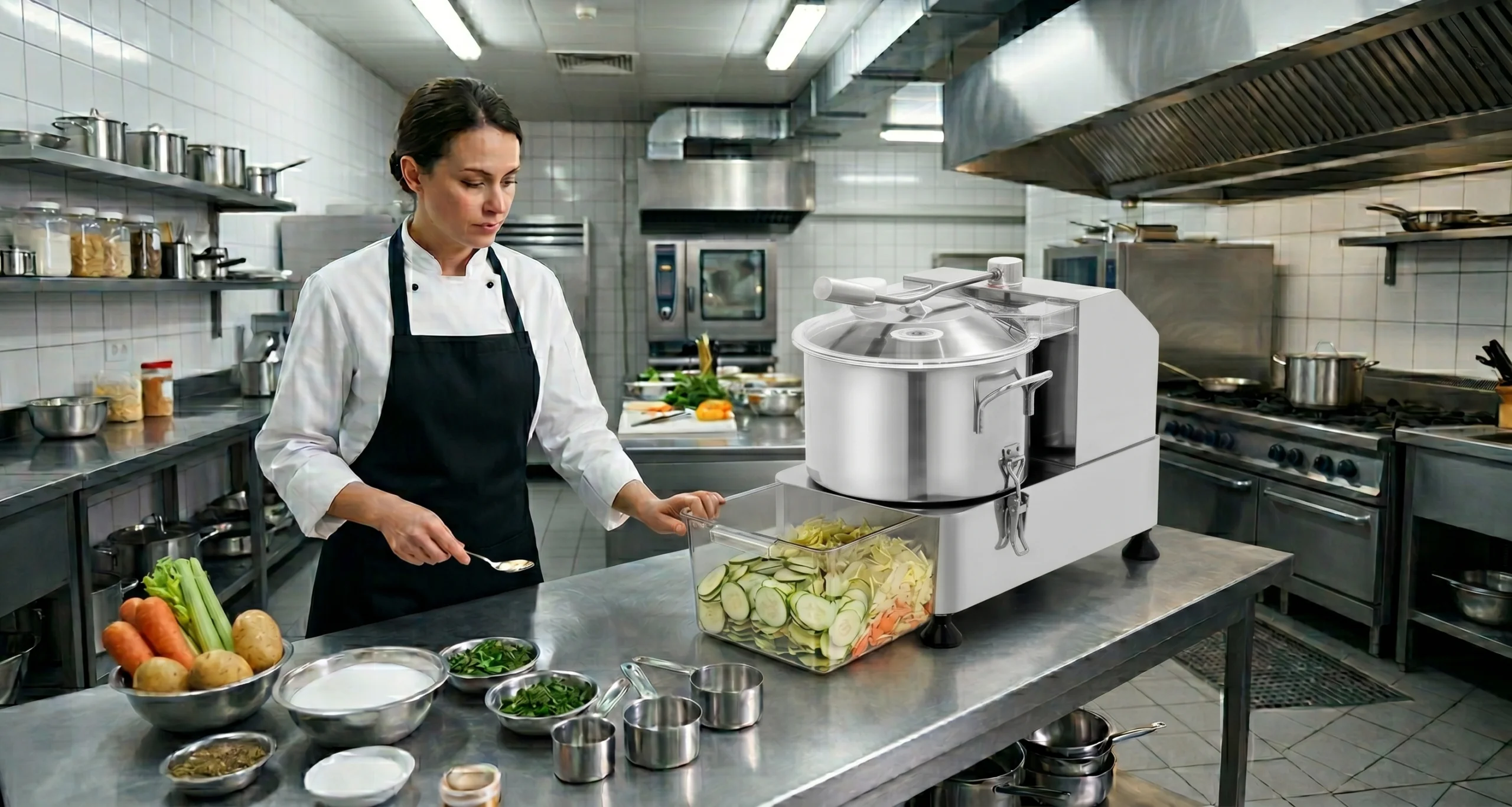
I always ask my customers about their daily output. You must know how much food you cut every day. Kitchen footprint constraints also decide your equipment selection. If you have limited space, a compact model is better. You must measure your kitchen tables first. A big machine takes up too much room. You need space for your staff to move around safely.
Hopper Size and Motor Power
You must look at the feed hopper size. The size of the feed hopper decides your preliminary prep labor. Ultra-wide chutes can take whole vegetables. You do not need to cut them first. This saves a lot of time. Also, you must check the motor horsepower. The motor must match your ingredient density. If you process hard root vegetables like carrots, you need higher wattage. A weak motor will stall. It will burn out quickly. I see this happen often when buyers choose cheap machines from bad suppliers.
| Volume Level | Machine Type | Hopper Size | Motor Requirement |
|---|---|---|---|
| Low (Under 50 lbs) | Manual | Standard | None |
| Medium (50-200 lbs) | Light Electric | Medium | Low Wattage |
| High (Over 200 lbs) | Heavy Electric | Ultra-Wide | High Wattage |
Manual vs. Electric Commercial Vegetable Slicers?
Are you unsure which power type is better? Buying the wrong type causes slow service or wastes money. Let us compare manual and electric slicers to make a smart choice.
Manual slicers suit intermittent prep under 50 pounds and do not need electricity. Electric continuous-feed models handle intensive, all-day production. Electric slicers cut fast and save labor costs. Manual slicers cost less to buy and are very easy to move.
Evaluating Machine Durability
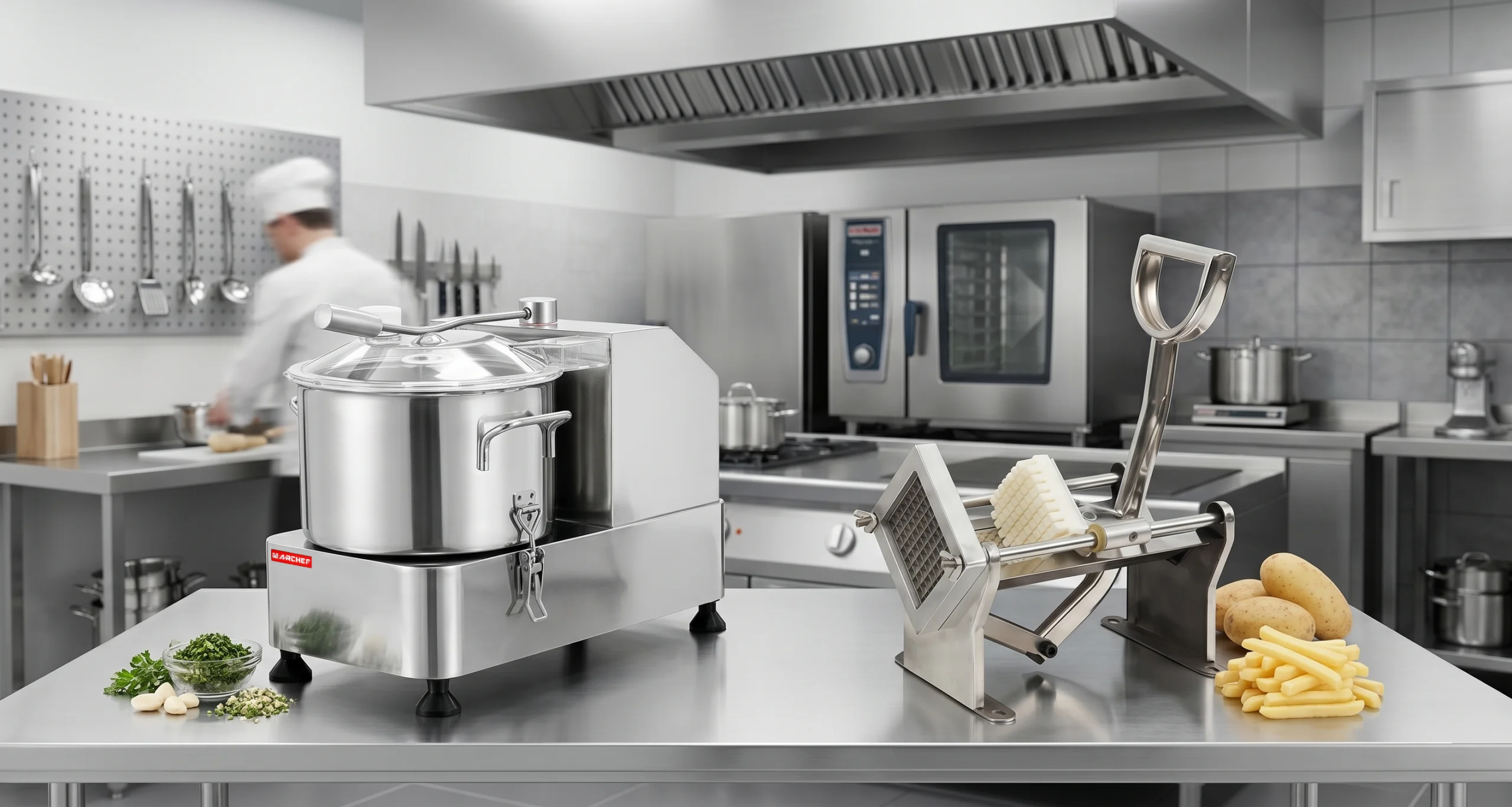
You need to think about machine durability in commercial settings. Our MARCHEF factory uses heavy-duty construction. You need cast aluminum or stainless-steel frames. These strong frames stand up to rigorous, daily mechanical stress. A manual machine is simple. It rarely breaks. But an electric machine works very hard. It needs a very strong body. I remember a buyer from Germany named Claus. He wanted a very durable machine for his cold room. We showed him our thick stainless-steel frame. He loved it. He bought two machines.
Ergonomic Design Benefits
You also need to look at ergonomic design elements. Manual and electric machines must be easy to use. Good handle placements help your staff. Angled feed chutes also help your staff. These designs reduce physical strain on kitchen workers during long working hours. Happy staff work faster. They do not get tired easily. A good design makes a big difference in a busy kitchen.
| Feature | Manual Slicers | Electric Slicers |
|---|---|---|
| Power Source | Hand power | Electricity |
| Best For | Small jobs | Large daily output |
| Frame Material | Cast aluminum | Stainless steel |
| Staff Strain | High | Low |
Popular Cutting Styles and Blade Types?
Do you struggle to cut food into different shapes? Buying many different machines is expensive. You need one machine with good blades to do all the work.
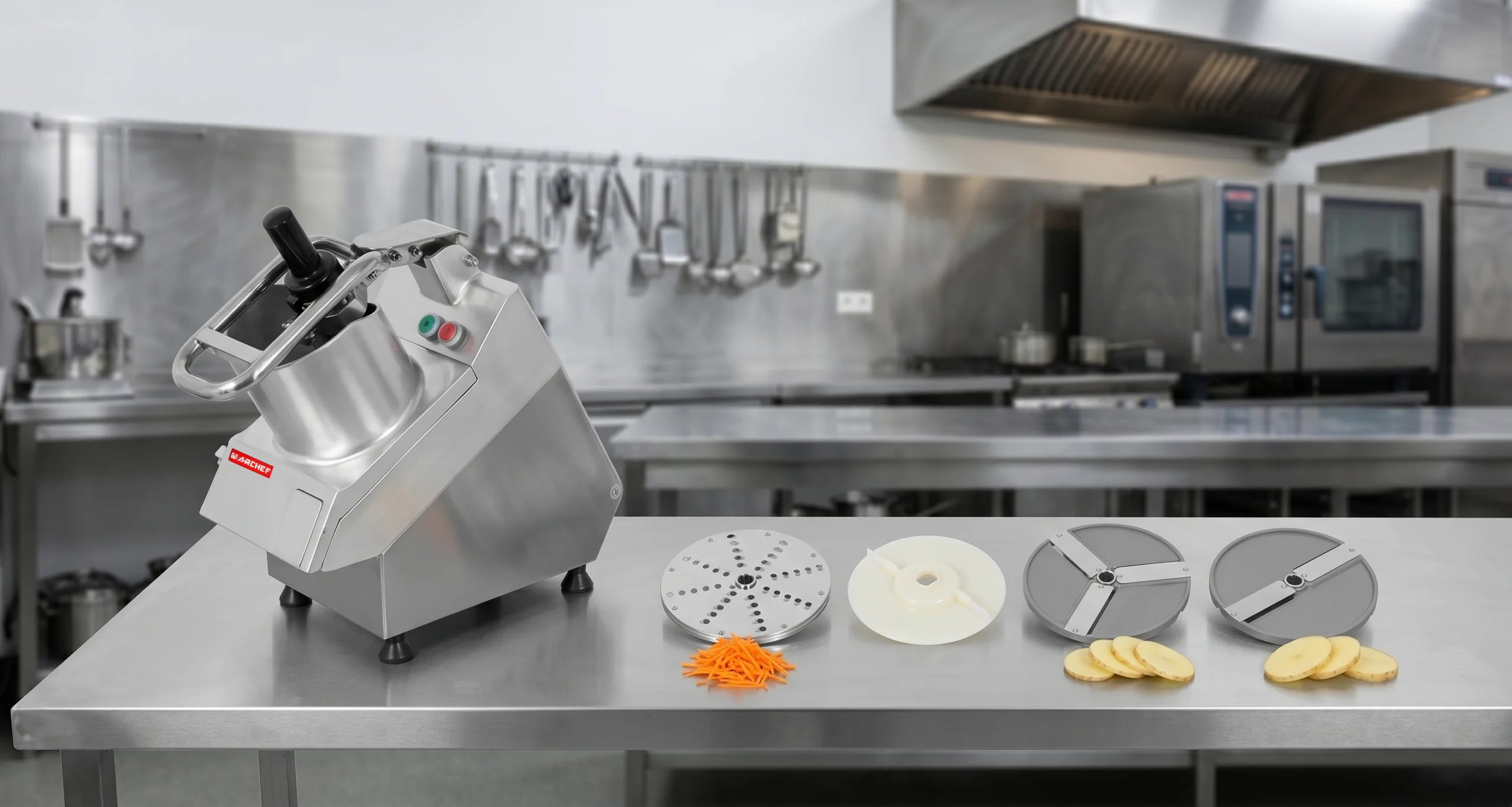
Blade versatility relies on interchangeable stainless-steel discs. A single unit can execute varied cuts like julienne, dicing, grating, and crinkle-cutting. You just change the disc to change the shape. This saves space and money in your commercial kitchen.
Selecting the Right Blades
You need to understand blade functions. Stainless steel is the best material for blades. It stays sharp. It does not rust. I test blades in our factory in Guangzhou every week. A good blade makes a clean cut. A bad blade crushes the vegetable. Your food looks bad if you use bad blades. You must check the blade quality before you pay. We polish our blades to make them smooth and sharp.
Cleaning and Sanitation
Sanitation efficiency is very important for your blades and machine. You must select models with tool-free disassembly. This means you can take the machine apart without tools. You also need smooth surfaces. You need dishwasher-safe components. These features stop food residue buildup. Bacteria grow quickly on dirty blades. A clean machine keeps your food safe. My European buyers are very strict about hygiene. Claus always asks about cleaning steps. I always suggest machines with easy-to-clean parts.
| Blade Type | Function | Best Food Type |
|---|---|---|
| Slicing Disc | Cuts flat pieces | Cucumbers, potatoes |
| Julienne Disc | Cuts long thin strips | Carrots, zucchini |
| Dicing Grid | Cuts small cubes | Onions, tomatoes |
| Grating Disc | Shreds food fine | Cheese, cabbage |
Operator Safety Features You Cannot Ignore?
Are kitchen accidents hurting your staff? Unsafe machines cause bad cuts and expensive hospital bills. You must protect your workers with proper safety features on your equipment.
Operator safety depends on built-in protective mechanisms. You need automatic motor shut-offs, enclosed blade housings, and pusher blocks. These features keep hands clear of moving parts. A safe machine stops running immediately when you open the lid.
Built-in Protective Mechanisms
Safety is the most important part of any kitchen machine. An electric slicer is very dangerous if it does not have safety parts. Enclosed blade housings cover the sharp edges. Pusher blocks help you push the food down. You never put your hand inside the machine. A smart buyer always checks these safety parts first. A fast machine is useless if it hurts your chef. We design our machines to block fingers.
Automatic Shut-off Systems
I always test the automatic motor shut-offs. The machine must stop immediately when someone lifts the handle. I once met a buyer who bought cheap machines without sensors. His staff got hurt. Now he only buys from suppliers who care about safety. At MARCHEF, we use magnetic sensors. If the machine is not put together right, it will not start. This protects your staff. This protects your business. You cannot ignore these simple safety rules.
| Safety Feature | How It Works | Why You Need It |
|---|---|---|
| Pusher Block | Pushes food into blades | Keeps fingers safe |
| Enclosed Housing | Covers the moving disc | Prevents flying pieces |
| Motor Shut-off | Stops motor if open | Stops severe cuts |
| Magnetic Sensor | Checks machine assembly | Prevents wrong use |
Choosing the Right Manufacturing Partner?
Do suppliers ignore your messages after you buy? Bad communication leads to delayed delivery and broken machines. You need a reliable factory to support your business long-term.
You must evaluate the manufacturer’s after-sales support, warranty terms, and the immediate availability of replacement parts. Good factory support minimizes critical kitchen downtime. Choose a partner with a stable supply chain and very clear communication.
Factory Strength and Control
Finding a good supplier is hard. Many buyers face a lack of communication with suppliers. This often results in delayed delivery. Our factory is located in Panyu District, Guangzhou City. We control the quality. We have stable supply chains. Buyers from Germany, like my friend Claus, need strong quality control. They are sensitive to quality. They are sensitive to price. We provide both. We make stainless steel products and fast food equipment every day.
After-Sales and Spare Parts
Evaluating after-sales support is very essential. Machines break down sometimes. You need fast help. You must look at the warranty terms. You also need the immediate availability of replacement parts. If a motor breaks, you cannot wait two months for a new one. This causes critical kitchen downtime. We keep many spare parts in our warehouse. We send them quickly. Good logistics help your business run smoothly. Clear communication builds a strong B2B partnership. We answer emails fast.
| Partner Quality | Bad Supplier | Good Supplier (MARCHEF) |
|---|---|---|
| Communication | Slow and unclear | Fast and direct |
| Spare Parts | Not available | Always in stock |
| Delivery | Often delayed | Always on time |
| Quality Control | Very weak | Very strict |
Conclusion
Choosing the right commercial vegetable slicer improves your kitchen speed and safety. You must match your volume, check the safety features, and pick a reliable factory partner like MARCHEF.